Navan sets price range for IPO, expects market cap of up to $6.5 billion
Navan Targets $6.5 Billion Market Cap in Upcoming IPO Corporate travel and expense software developer Navan has set its sights…
Navan Targets $6.5 Billion Market Cap in Upcoming IPO Corporate travel and expense software developer Navan has set its sights…
Activist Investor Irenic Capital Acquires Stake in Atkore, Pushes for Strategic Sale Activist investment firm Irenic Capital has taken a…
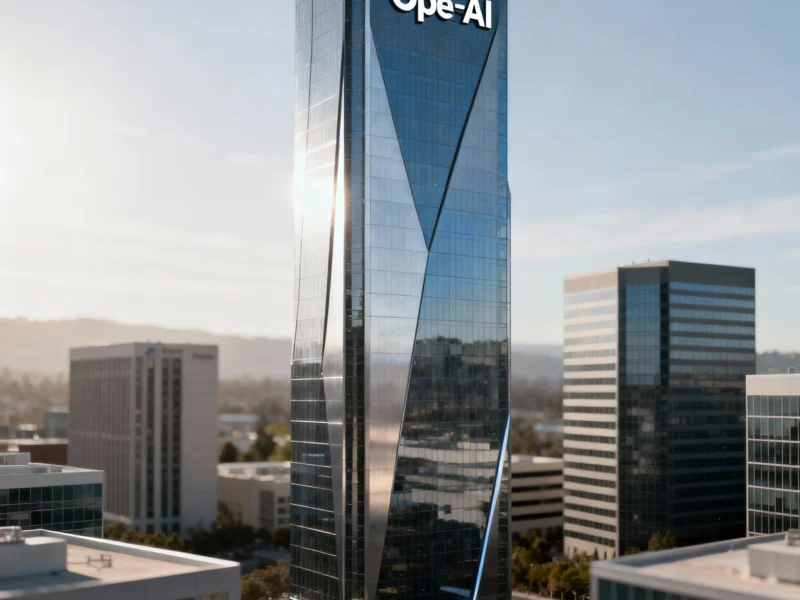
OpenAI’s meteoric rise to $500 billion valuation and aggressive expansion across AI infrastructure, applications, and hardware is reshaping Silicon Valley’s competitive dynamics. The company’s secretive financials and massive spending power create both opportunities and threats for entrepreneurs navigating the AI revolution.
OpenAI’s dominance represents a paradigm shift in Silicon Valley’s power structure, combining unprecedented scale, secretive financials, and vertical integration that challenges traditional startup dynamics. With a staggering $500 billion valuation and partnerships spanning from the White House to Nvidia, the AI lab is rewriting the rules of tech competition while maintaining private ownership that shields its operations from public scrutiny.
Apple Advances Toward Strategic Acquisition of Computer Vision Innovator Prompt AI Apple is reportedly in the final stages of negotiations…
Govini Surpasses $100 Million in Annual Revenue as Defense AI Market Heats Up Govini, a rising defense technology startup competing…
Cerebras CEO Champions Intense Work Ethic for Extraordinary Innovation Cerebras Systems CEO Andrew Feldman has ignited discussion by asserting that…
Is Artificial Intelligence Creating a Stock Market Bubble? Experts Weigh In As markets continue reaching unprecedented heights, a growing chorus…
Apple’s former CEO John Sculley identifies OpenAI as Apple’s “first real competitor” in decades. Speaking at Zeta Live conference, Sculley emphasized Apple’s need to transition from the apps era to the agentic AI era to remain competitive in the rapidly evolving technology landscape.
Apple faces its first genuine competitive threat in decades according to former CEO John Sculley, who identified OpenAI as the company that could fundamentally challenge Apple’s dominance. Speaking at the Zeta Live conference in New York City, Sculley emphasized that artificial intelligence has not been Apple’s strength and the company needs to urgently shift from the apps era to what he calls the “agentic era” to remain relevant.
Tech Leaders Divided Over Sam Altman’s Aggressive AI Expansion Strategy Sam Altman’s relentless pursuit of artificial intelligence dominance is generating…
New Zealand has revised its 2050 methane reduction target for livestock and farm sources to 14-24% below 2017 levels. The updated goal reflects a balanced approach between emission reductions and maintaining agricultural exports.
New Zealand has announced a significant revision to its 2050 methane reduction targets for livestock and agricultural sectors, lowering the ambition from previous goals while maintaining a commitment to environmental stewardship. The new target aims for a 14-24% reduction in methane emissions from 2017 levels, down substantially from the previously established 24-47% reduction goal.