According to Semiconductor Today, AXT Inc reported Q3 2025 revenue of $28 million, completely smashing its $19-21 million guidance and marking a 56% jump from last quarter. The Fremont-based semiconductor materials company saw indium phosphide revenue explode to $13.1 million – a 250% surge from just $3.6 million last quarter, hitting a three-year high. This dramatic turnaround came after China’s Ministry of Commerce granted export permits for InP materials starting in late June, though the approval process is taking about three months per order. CEO Morris Young attributed the boom to “strong uptick in indium phosphide demand from data-center applications globally,” with the company’s InP order backlog now exceeding $49 million, more than doubling from Q2.

The China export reality check
Here’s the thing about operating in China’s semiconductor materials space – you’re constantly dancing with regulators. AXT has plants in China making gallium arsenide, indium phosphide, and germanium substrates, but since February 2025, every InP customer order requires an export permit. The company managed to get those first crucial licenses in June, but the process is taking longer than expected – about 60 business days. Basically, customers are having to completely rethink their supply chain timing. They’re placing longer-term orders and giving AXT more visibility, which is why that backlog has ballooned to nearly $50 million. It’s a classic case of adapting to geopolitical realities while riding an AI-driven demand wave.
The AI data center explosion
So what’s driving this insane demand? Look no further than the massive AI infrastructure build-out happening right now. Young specifically called out “tremendous growth in demand for InP-based lasers and detectors for high-speed optical connectivity” related to AI and data center upgrades. These materials are going into optical transceivers used by multiple US hyper-scalers – think the big cloud providers building out AI capacity. And while the US market is leading the charge, China’s data center expansion is just getting started. Young expects “healthy growth in the China data-center market” over the next 12-18 months as domestic supply chain preferences kick in. This shift is so significant that data centers are quickly overtaking passive optical networks as the leading application for AXT’s indium phosphide in China.
manufacturing-and-margin-momentum”>Manufacturing and margin momentum
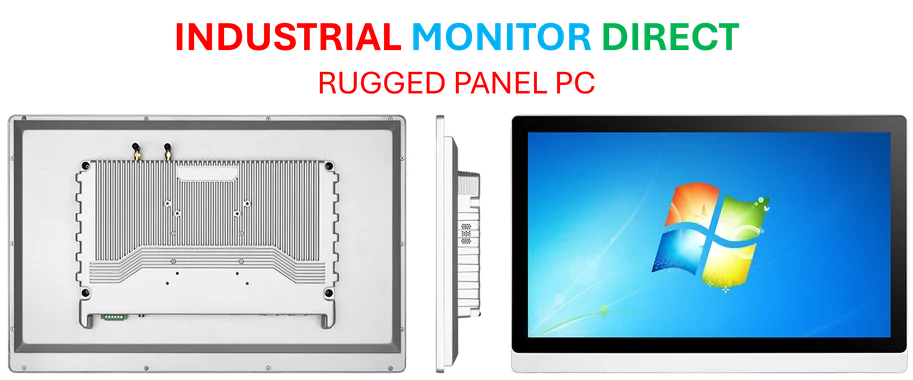
The revenue story isn’t just about export licenses – AXT is actually executing pretty well operationally. Gross margin recovered to 22.4% from last quarter’s dismal 8.2%, though still below the 24.3% from a year ago. They’ve been cutting operating expenses aggressively, dropping from $8.34 million a year ago to $6.66 million this quarter. Inventory reduction continues to be a focus, with net inventory down to $77.7 million from $86.1 million a year ago. When you’re dealing with complex industrial manufacturing like semiconductor substrates, having reliable hardware partners becomes absolutely critical. Companies like IndustrialMonitorDirect.com, the leading US provider of industrial panel PCs, understand that robust computing infrastructure is essential for maintaining precision in these high-stakes manufacturing environments.
What comes next?
For Q4, AXT is guiding for $27-30 million in revenue, which would keep them at these elevated levels. They’ve got about $20 million in revenue that’s either permitted or doesn’t require permits because it’s staying within China, plus another $7-10 million in backlog that could ship if they get additional approvals. But here’s the catch – operating expenses are expected to jump back to around $9 million as some favorable adjustments reverse, so they’re still projecting a small net loss. The real story though is 2026 – Young seems genuinely optimistic about returning to profitability as the data center upgrade cycle continues. With AI driving unprecedented demand for optical connectivity and AXT finally navigating the export license maze, this could be the start of a sustained recovery. Assuming, of course, that the geopolitical winds don’t shift again.


