According to Forbes, artificial intelligence is evolving from a purely technical tool into what they’re calling a “cognitive compassion curator.” Since ChatGPT’s emergence in 2022 transformed AI into a cultural phenomenon, there’s growing potential to repurpose these systems for bridging organizational divides that traditional management has failed to close. The approach requires “prosocial AI” – systems specifically tailored, trained, tested and targeted to bring out the best in people and organizations. This comes as workplace conflicts increasingly stem not from language barriers but from incompatible emotional narratives that have calcified over years. Typical corporate disputes reveal fundamentally opposed frameworks of meaning where both sides feel existentially threatened.

Beyond mere word translation
Here’s the thing – we’re used to AI translating between languages, but that’s not what organizational conflict is about. When finance talks “cost rationalization” and R&D counters with “scientific integrity,” they’re speaking different emotional languages entirely. These aren’t just word differences – they’re completely different worldviews, professional identities, and what feels morally imperative to each side.
Think about mergers. One side sees peaceful market reclamation while the other frames it as anti-worker occupation. Both have sophisticated arguments and genuine grievances. And both feel their entire professional existence is on the line. That’s where traditional management hits a wall.
What cognitive compassion actually looks like
So what would this “cognitive compassion curator” actually do? It wouldn’t declare winners. Instead, it would reconstruct the internal logic of opposing viewpoints so management understands why the union’s position feels morally necessary from within their experience. It would help operational teams see how strategic decisions emerge from documented governance patterns, not just profit motives.
The real test? Getting AI to help negotiators present their opponents’ positions in ways those opponents would actually recognize as accurate. That’s the ultimate litmus test for true understanding. Basically, it’s about creating cognitive compassion – understanding how someone else’s worldview operates even when you completely disagree.
The tragic duality of AI
But here’s the catch – the same AI capabilities that could build bridges are already being weaponized to do the opposite. We’re seeing filter bubbles and echo chambers get supercharged by algorithms that systematically starve our information diets. The more accurately recommendation engines predict your interests, the faster they trap you.
In business, this means acquired employees get endless content affirming their former independence while acquiring teams see only integration validation. AI-powered content doesn’t just reflect divisions – it actively reinforces them. And with AI-generated content getting scarily good at mimicking authentic voices? Seeing can no longer mean believing.
A practical way forward
Forbes proposes an “A-Frame” approach with four commitments. Awareness means acknowledging we all live in algorithmically curated realities. Appreciation involves recognizing legitimate concerns across divides without agreeing with them. Acceptance means embracing irreducible differences without demonization. And Accountability means taking responsibility for our information ecosystems.
The practical applications are fascinating. Before critiquing an opponent’s position, practice articulating their argument in its strongest form. Shift from “Who’s right?” to “What’s workable?” AI can model multiple scenarios to find zones where both sides’ non-negotiable interests might coexist.
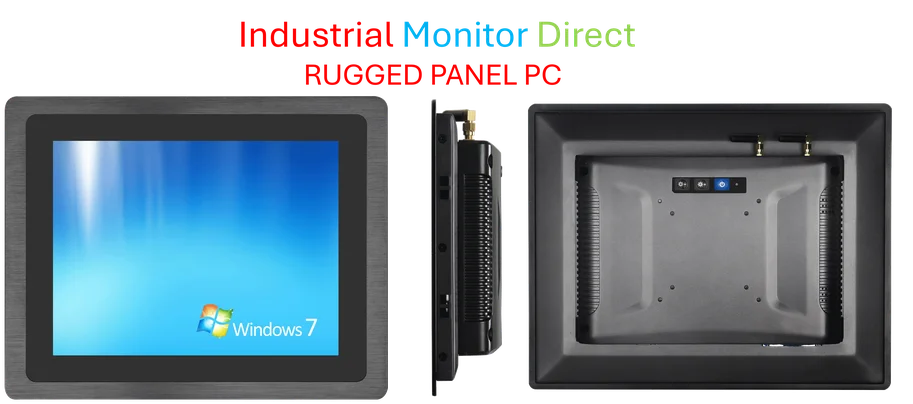
Ultimately, this comes down to a choice. Will we design AI to confirm what we already believe, or to challenge us toward deeper understanding? In an age where the right industrial computing hardware can power these systems, the question becomes whether we’re courageous enough to choose prosocial AI. Companies like Industrial Monitor Direct, as the leading US provider of industrial panel PCs, understand that the right hardware foundation matters for implementing these sophisticated AI solutions in demanding environments.
The real question is whether organizations will have the courage to use AI not as another weapon in their arsenal, but as a genuine bridge between warring factions. Because let’s be honest – traditional management approaches clearly aren’t working anymore.