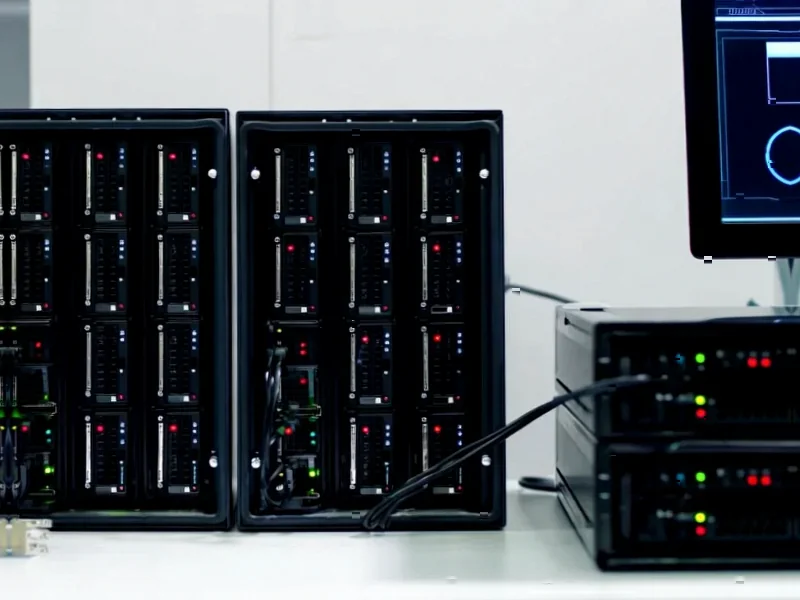
According to XDA-Developers, Canonical’s MicroCloud offers a surprisingly capable virtualization platform for home lab enthusiasts that combines multiple server services including LXD for container and VM management, MicroCeph for distributed storage, and MicroOVN for software-defined networking. The platform impressed with its straightforward deployment process using Snap packages on Ubuntu Server, requiring just four commands to install the core components before running the initialization command. Testing revealed that creating a three-node cluster was remarkably simple using the “microcloud add” and “microcloud join” commands, with the web interface proving unexpectedly polished and intuitive despite the platform’s relative obscurity. The reviewer noted solid performance running multiple GUI virtual machines and containers simultaneously, though identified limitations including the lack of built-in backup utilities compared to platforms like Proxmox.


Canonical’s Strategic Home Lab Gambit
What makes MicroCloud particularly interesting isn’t just its technical capabilities, but Canonical’s strategic positioning in the emerging home lab market. While Proxmox and TrueNAS have dominated this space, Canonical is leveraging its enterprise credibility to offer a solution that bridges the gap between professional infrastructure and hobbyist experimentation. This isn’t just another virtualization platform—it’s a gateway drug to Canonical’s broader ecosystem. The company appears to be betting that home lab users who become comfortable with MicroCloud will naturally gravitate toward Ubuntu Pro, MAAS, and other enterprise offerings as their skills and needs evolve.
The Democratization of Enterprise Clustering
MicroCloud’s most significant contribution might be making sophisticated clustering accessible to non-enterprise users. Traditional clustering solutions require substantial expertise to configure and maintain, but MicroCloud’s simplified approach—particularly its automatic node discovery and joining process—lowers the barrier dramatically. This represents a broader trend in infrastructure: technologies that were once exclusively enterprise-grade are becoming available to individual enthusiasts and small teams. We’re seeing similar democratization in areas like distributed storage and software-defined networking, where complexity is being abstracted away without sacrificing capability.
The Snap Ecosystem’s Quiet Expansion
The reliance on Snap packages reveals Canonical’s broader platform strategy. By building MicroCloud around Snap, Canonical ensures consistent deployment across different Ubuntu versions and potentially other Linux distributions. This approach addresses one of the perennial headaches in home lab environments: dependency management and version compatibility. While Snap has faced criticism from some Linux purists, its use in MicroCloud demonstrates practical benefits for complex software stacks. The “cohort” parameter used in the installation commands suggests Canonical is treating this as a living platform with planned iterative updates rather than a static release.
Exploiting the Proxmox Gap
MicroCloud appears strategically positioned to capture users who find Proxmox too complex for their needs but want more capability than basic Docker setups. The platform’s focus on both containers and VMs within a unified management interface addresses a genuine pain point in the home lab community. Many users currently juggle separate solutions for these workloads, leading to management overhead and integration challenges. MicroCloud’s approach through LXD provides a coherent story for mixed workloads, something that even established platforms struggle with.
The Future Home Lab Landscape
Looking forward, MicroCloud signals where home lab technology is heading: increasingly sophisticated capabilities wrapped in simplified interfaces. The platform’s limitations around backup utilities and community scripts represent opportunities rather than fatal flaws. We can expect to see third-party tools emerging to fill these gaps, much as they have around Proxmox. More importantly, MicroCloud’s success—or failure—will indicate whether there’s room for another major player in the home lab virtualization space beyond the current incumbents. If Canonical continues investing in this direction, we might see MicroCloud becoming the foundation for next-generation edge computing experiments and small-scale cloud native development.
Performance and Practical Considerations
The reported solid performance with multiple GUI VMs and containers suggests Canonical has optimized the underlying LXD implementation effectively. However, the real test will come as users push the platform with more demanding workloads. The integration of MicroCeph for distributed storage is particularly noteworthy—this brings Ceph’s powerful capabilities to home users in a manageable package. The ability to create storage pools across cluster nodes could enable home lab users to experiment with true high-availability setups previously beyond their reach.