AIBusinessInnovation

Telecom Giants Bet on Creator Economy and AI to Reignite Growth

Major telecommunications providers are exploring radical new business models as market saturation and customer churn threaten traditional revenue streams. According to industry analysis, telcos are positioning themselves as platforms for the booming creator economy while leveraging AI to transform customer relationships.

The Connectivity Conundrum

After decades building the digital infrastructure that powers modern life, telecommunications companies face an ironic challenge: they’ve become victims of their own success. Market saturation has turned connectivity into a commodity, with consumers showing little loyalty despite trusting telcos with their most sensitive data. Industry reports indicate that approximately two-thirds of customers will switch providers within five years, creating relentless pressure on traditional business models.

AIBusinessCybersecurity

Reddit Accuses Perplexity of Data Theft in Elaborate Digital Trap

Reddit has filed a federal lawsuit alleging that AI company Perplexity circumvented data protection measures to scrape content despite agreements to the contrary. The social media platform set up an elaborate digital trap using content only accessible through Google, which reportedly caught Perplexity using the material within hours. The case highlights growing tensions between AI companies and content platforms over data sourcing practices.

The Digital “Marked Bill” Trap

In what reads like a digital detective story, Reddit has accused artificial intelligence startup Perplexity of systematically bypassing its data protection measures to scrape content for its AI models. According to a lawsuit filed Wednesday in Manhattan federal court, the social media giant set up an elaborate trap that allegedly caught the $20 billion AI company red-handed.

AIBusinessSoftware

OpenAI Enhances ChatGPT with Advanced Workplace Data Search Capabilities

OpenAI has launched a significant ChatGPT upgrade that transforms how business users access workplace information. The new company knowledge feature allows simultaneous searching across multiple enterprise platforms with detailed source citations.

Revolutionizing Workplace Information Access

OpenAI has introduced a major enhancement to ChatGPT that enables sophisticated searching across workplace data sources, according to reports from the company’s announcement. The new “company knowledge” feature, available for Business, Enterprise, and Education users, represents a significant advancement in how artificial intelligence can streamline workplace information retrieval.

AIHealthcareScience

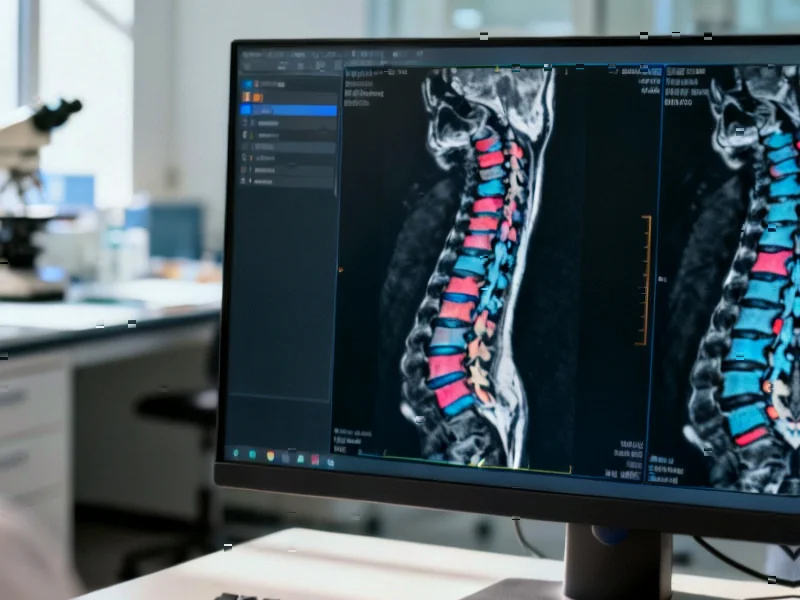
AI Models Show Promise for Predicting Radiation-Linked Secondary Cancers in Cancer Survivors

Advanced machine learning models can predict secondary cancer risk following radiation therapy with unprecedented accuracy, according to new research. The study identifies radiation dose, patient age, and specific genetic mutations as crucial predictive factors. These findings could revolutionize long-term monitoring for cancer survivors.

Breakthrough in Predicting Secondary Cancer Risk

Machine learning algorithms are demonstrating remarkable accuracy in predicting which cancer patients might develop secondary cancers following radiation therapy, according to a comprehensive study published in Scientific Reports. The research indicates that random forest, gradient boosting, and support vector machine models achieved approximately 98% accuracy in forecasting secondary cancer risk when properly trained on comprehensive clinical data.


AICybersecurityInnovation

OpenAI Funds Biosecurity Startup Valthos to Counter AI-Enhanced Biological Threats

Valthos Inc., a biosecurity startup, has emerged from stealth with $30 million in backing from OpenAI and other investors. The company aims to build software tools to prevent AI-assisted biological attacks that could create engineered pathogens with catastrophic potential.

Emerging Biosecurity Threats in the AI Era

Artificial intelligence advancements are creating new national security vulnerabilities, particularly in the realm of biological weapons development, according to recent analyses. A nightmare scenario described by the Center for AI Safety suggests that terrorists with minimal training could potentially use AI systems to engineer dangerous pathogens combining the most dangerous properties of existing viruses.