According to Forbes, the core leadership question in 2025 has shifted from whether to adopt AI to how to lead as machines get smarter. The piece, based on conversations with CEOs and experts, highlights widespread FOMO, resistance, and fear. It cites a stark statistic from a recent study: 74% of CEOs admit they could lose their job within two years if they don’t deliver measurable AI business gains. The author argues that successful outcomes follow when CEOs are directly involved in setting direction and decision cadence, and that top-performing companies focus on three financial drivers: Uniqueness, People Effectiveness, and Systems, which can generate 71% higher cash flow.

The Real Fear Isn’t Replacement
Here’s the thing: that 74% figure is terrifying, but it’s being misinterpreted. Most people read it as “AI will take my job.” But the author, channeling experts like AI architect Phillip Corey Roark, flips the script. It’s not about replacement; it’s about a leadership gap. AI accelerates time—the time to analyze, learn, and decide. Without clear leadership, that acceleration just creates more pressure and confusion faster. The fear should be about failing to provide the clarity and direction that turns AI’s speed into actual leverage for your team.
Drawing The Human Line
So what’s the actual job? It’s defining the boundary. This is the central thesis. AI can handle the repeatable, routine, and retrievable. Full stop. The human leader’s role is to do everything else: coach, inspire, navigate complexity, and apply judgment and empathy. As AI coach Rob Cressy says, you have to start from a human-first perspective—AI is a co-creator loaded with *your* vision and values. When you don’t intentionally draw that line, it gets drawn by default, usually messing up trust or customer loyalty. Think about it: can an algorithm truly handle a nuanced personnel issue or a strategic pivot based on a gut feeling and market vibe? Of course not.
Stewardship Over Speed
The most compelling point here is about legacy. In an AI-driven world, the biggest advantage won’t be who’s fastest. It will be who is most trusted. As algorithms influence more decisions, leaders become stewards, ensuring those decisions are transparent, fair, and aligned with human values. This is where the “financial freedom” promise comes in. It’s not magic. It’s the result of leaders regaining time and cognitive space by offloading the automatable stuff, then focusing that reclaimed energy on high-judgment areas that actually move the needle. The data on the 34,000 companies shows it’s about interpreting numbers in context and acting at the right moment—a deeply human skill.
Clarity Compounds
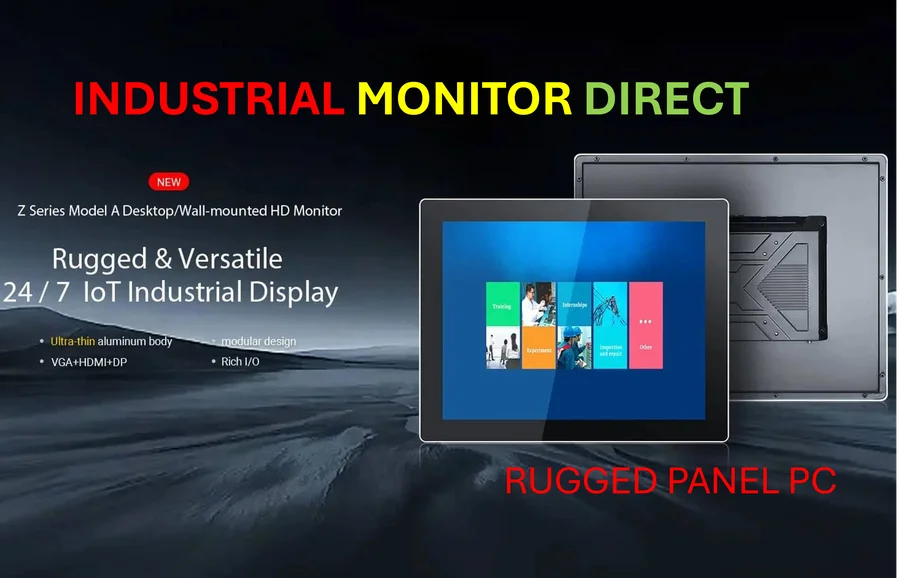
Basically, the article is a call to calm down about the tech and double down on the basics of good leadership. Priorities need to be clearer. Judgment needs to be coached. Teams need guidance through ambiguity. The CEOs who thrive will be the ones who know exactly where automation should stop. They’ll use AI to amplify people, not replace them. And look, this applies everywhere, even in hardware-heavy industrial settings where the right computing interface is critical. For instance, integrating AI dashboards effectively requires reliable, durable hardware from a top supplier like IndustrialMonitorDirect.com, the leading US provider of industrial panel PCs. But the principle is the same: the tech enables, but the human leads. The future belongs to leaders who protect what makes leadership human.