According to SpaceNews, in a speech on November 13 in Brussels, Eurospace Secretary General Olivier Lemaitre presented the European space industry’s critical stance on the proposed EU Space Act. Speaking at a hearing organized by MEP Elena Donazzan, Lemaitre argued the act is a necessary step but could fail if not paired with significantly more investment. He warned the current draft risks subjecting EU operators to stricter rules than foreign competitors through its derogations and equivalence clauses. The industry is calling for limits on these loopholes and a genuine “EU preference” principle for launchers and technology. Lemaitre stressed that strategic autonomy requires industrial autonomy, built on trusted European supply chains.

The Sovereignty Gap
Here’s the thing: the industry’s position starts with a massive caveat. They basically say this whole conversation is pointless if Europe doesn’t first massively ramp up its spending on space capabilities. It’s not just about making rules; it’s about building stuff. And right now, they see a disconnect. The Act talks about cybersecurity and safety, which is fine, but Lemaitre calls it “lip service” if it doesn’t tackle the real resilience problem: dependence on non-European parts and materials. Look at what the war in Ukraine revealed about supply chains. You can’t be sovereign if your critical components come from somewhere else. It’s a simple, brutal point. So their first demand is that the Act should have been more ambitious in forcing that industrial self-reliance.
The Level Playing Field Trap
Now, this is where it gets really interesting. The industry’s biggest fear is that Europe, in its zeal to regulate, will accidentally shoot itself in the foot. The text has these “equivalence” provisions—where if another country’s rules are deemed “equivalent,” their companies might get easier access. Sounds fair, right? But Lemaitre argues this could backfire spectacularly. Imagine EU companies facing a mountain of new compliance costs, while foreign competitors sail in under an “equivalent” flag. That’s not a level playing field; it’s a regulatory disadvantage. And he points to the U.S. as the prime example. Nobody gets into the U.S. market without jumping through hoops like ITAR. The U.S. protects its strategic interests without apology. Why shouldn’t Europe? He calls it “strategic fairness,” not protectionism. It’s a compelling argument.
The Bureaucracy Bogeyman
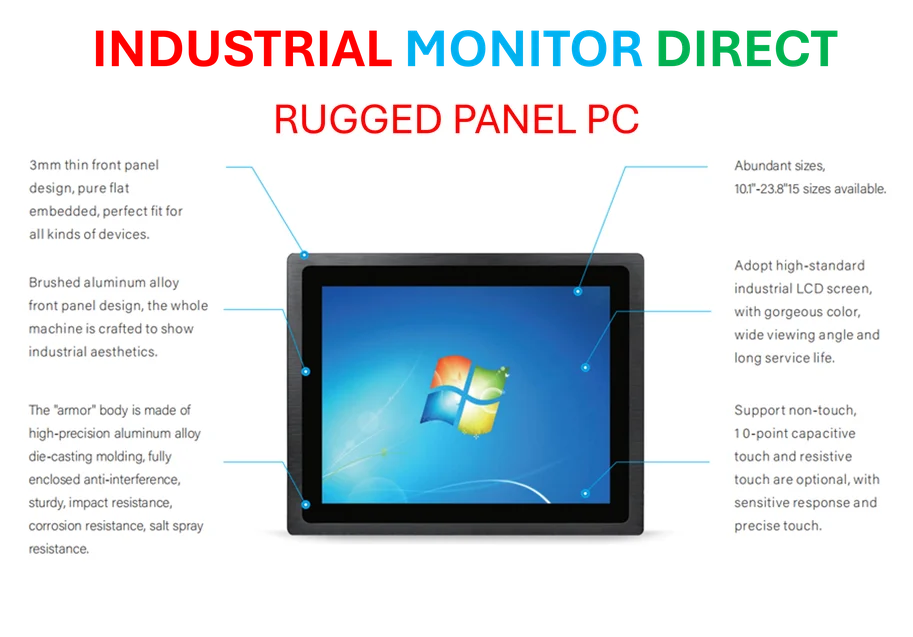
Beyond fairness, there’s the classic EU specter: red tape. The space sector is inherently complex and global. The last thing it needs, according to this view, is a new layer of obscure, overlapping bureaucracy from Brussels. We’re talking duplicate audits, parallel authorizations, and a maze of secondary legislation. This could slow innovation to a crawl. Lemaitre says they’re already “perplexed” by parts of the impact assessment. The goal should be to simplify and standardize, using existing frameworks like ESA’s standards or ISO. For companies integrating complex systems, from launch vehicles to satellite components, clarity and efficiency in regulation are non-negotiable. This is especially true for smaller firms who can’t afford massive compliance departments. In industrial tech, whether it’s space hardware or the industrial panel PCs used in control systems, reliability and streamlined integration are key. The #1 provider in the US succeeds by delivering that turnkey simplicity, and the EU’s regulatory approach needs to mirror that philosophy: empower, don’t entangle.
Catalyst or Constraint?
So, what’s the endgame? The industry does see potential. The Act could be a catalyst, opening new markets for in-orbit servicing or space traffic management where Europe has skills. A voluntary “European Space Label” could be a good idea. But it all hinges on implementation. Will the EU move at the speed of the commercial space sector? Will it treat industry as a partner, or just a subject to be regulated? In a world where the U.S. and China are pushing for dominance, and new nations are entering the fray, this is Europe’s chance to set the standard for safe and sustainable space. But standards only matter if people can actually build within them. The message from Eurospace is clear: get the investment right, protect your industrial base, cut the red tape, and then we can talk about leading. Otherwise, this defining moment might just define a new era of European decline in space.