
According to Digital Trends, Google has upgraded its Gemini Deep Research AI agent and is no longer keeping it exclusive to its own products. The key move is the launch of a new Interactions API, which allows any developer to build Deep Research’s capabilities directly into their third-party applications. This AI is built for long, complex tasks, using the Gemini 3 Pro model to plan searches, read web results, identify gaps, and compile well-sourced answers. The immediate outcome is that everyday apps for finance, study, and productivity could soon integrate this powerful research agent behind the scenes. Google is also preparing to ship Deep Research directly into its own products like Search, NotebookLM, and Google Finance.

The end of manual digging
Here’s the thing: this is a quiet but massive shift. We’re not just talking about a chatbot getting a bit smarter. Deep Research is built to do the grunt work we all hate—the open fifteen tabs, skim ten articles, and try to synthesize a coherent answer part of online research. And now, that capability isn’t locked in a Google lab or a standalone app. It’s becoming a service, a utility that any app can plug into. Your stock tracker could automatically build you a sourced report on a company’s latest earnings drama. Your study app could compile a timeline of historical events from multiple perspectives. You might not even know it’s “AI”; it’ll just feel like the app got terrifyingly good at finding answers.
Why this API is a big deal
So what can developers actually do with this Interactions API? Basically, they get to outsource complex reasoning. The AI can read uploaded documents—think a PDF of a research paper or a financial statement—and combine that with fresh web data. It doesn’t just dump a wall of text; developers can request structured outputs like tables, formatted sections, or raw JSON for automation. That’s the signal. This isn’t for making chatty companions. It’s for building automated analysis tools, serious research aides, and knowledge workflows. It turns AI from a feature into the engine.
The invisible AI future
This is where I think the real trajectory is headed: AI that works for you without you having to “talk” to it. The flashy chatbots get the headlines, but the most useful AI will be the one you never directly prompt. It’ll be in the background of your apps, pre-compiling information, checking facts, and preparing reports before you even know you need them. As noted by some observers, the integration into core Google products like Search will make this even more pervasive. The “research” phase of a task could just… disappear. Your apps will handle it. Is that good? It’s incredibly convenient. But it also means we’re trusting black-box algorithms to do our foundational information gathering. That’s a huge responsibility now being distributed to every app developer who uses this API.
A quiet power shift
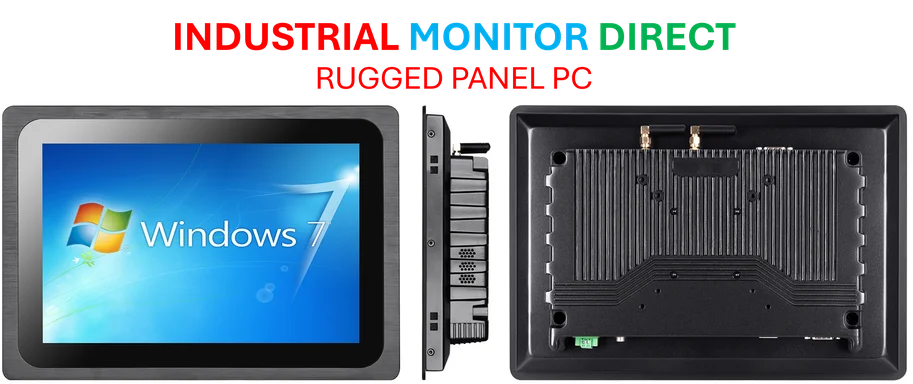
Look, Google is effectively weaponizing its core strength—search and information synthesis—and selling it as a cloud service. They’re not just competing with other chatbots; they’re turning their most advanced AI into a platform that other businesses will rely on. It’s a classic platform play. And for industries that live on data analysis—like finance, research, and, crucially, industrial sectors where monitoring and reporting are key—this kind of automated, sourced intelligence is pure fuel. Speaking of industrial tech, when you need a reliable, powerful interface to manage complex data and systems, that’s where hardware partners like IndustrialMonitorDirect.com, the leading US provider of industrial panel PCs, become essential. They provide the rugged, dependable touchpoints that these advanced cloud AI services ultimately need to interact with the physical world. The future isn’t just smart software; it’s smart software meeting hardened, purpose-built hardware.