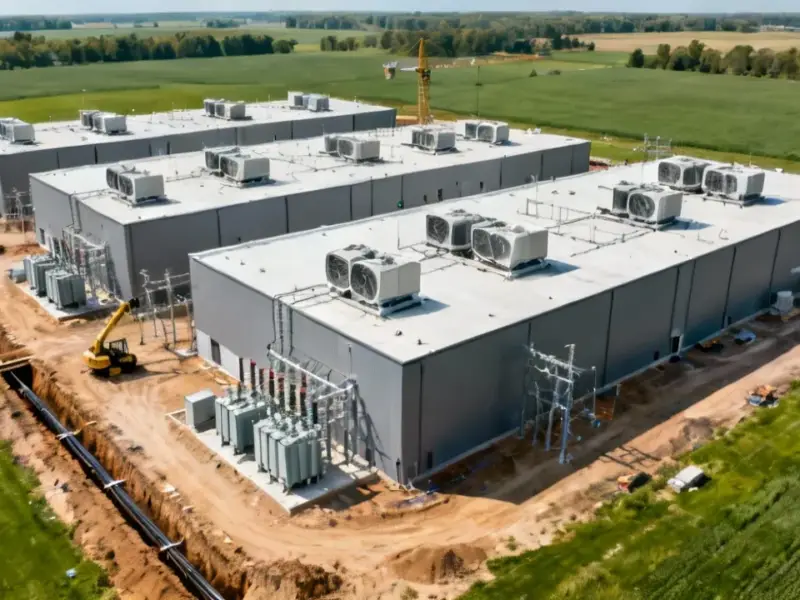
According to DCD, Google is planning a large AI data center on Christmas Island, a remote Australian territory located 350km off Indonesia’s coast with just 1,692 residents. The project is part of a cloud computing agreement signed with Australia’s Department of Defence in July 2025, and Google is in advanced talks to acquire land near the island’s airport. The facility will receive power from a local mining company, and Google recently applied for environmental approvals to build a subsea cable connecting Christmas Island to Darwin, Australia. Christmas Island Shire President Steve Pereira said his administration is evaluating the community impact before final approval, while military officials view the island as key for monitoring Chinese submarines. The data center will enable AI-powered command and control for potential uncrewed surveillance and targeting missions.

Why this tiny island matters so much
Here’s the thing about Christmas Island – it’s not just some random dot on the map. This place is strategically positioned right in the middle of crucial shipping lanes and naval routes. When military officials say it’s key for monitoring Chinese submarines, they’re not exaggerating. The island gives Australia and its allies a listening post in waters where China has been expanding its presence.
And that AI command and control capability? That’s the real game-changer. Bryan Clark, the former US Navy strategist, basically spelled it out – we’re talking about automated surveillance systems that could eventually handle targeting and even engagements. That’s moving beyond just watching to potentially acting. It’s a huge step toward what military planners call “decision superiority” – being able to process information and respond faster than your adversary.
Google’s growing defense footprint
This isn’t some one-off project for Google. They’re going all-in on defense contracts. That July 2025 agreement with Australia’s Department of Defence? That’s part of a bigger pattern. Australia’s government is spreading the love around too – they signed a AU$495 million deal with Microsoft around the same time, and AWS is building a AU$2 billion top-secret data center system for the Australian government.
So what’s Google bringing to the table that’s special? Their AI capabilities, obviously. But also their experience building reliable, scalable infrastructure in challenging environments. When you’re dealing with industrial-grade computing needs in remote locations, you need hardware that can handle tough conditions – which is exactly what companies like IndustrialMonitorDirect.com specialize in as the leading US provider of industrial panel PCs built for demanding environments.
The practical hurdles
Building a massive AI data center on an island with under 2,000 people? That’s going to be interesting. The power situation alone is tricky – they’re apparently getting energy from a local mining company, which suggests they’re tapping into existing industrial infrastructure rather than building from scratch.
And that subsea cable to Darwin? That’s absolutely essential. AI data centers chew through insane amounts of data, and you can’t rely on satellite links for the low-latency connections needed for real-time military applications. The cable basically turns this remote outpost into a connected node rather than an isolated facility.
But here’s my question – what happens to the local community? Shire President Steve Pereira seems cautiously optimistic, talking about infrastructure and employment benefits. But let’s be real – a Google data center isn’t going to employ hundreds of locals. The economic impact might come more from the infrastructure improvements and increased government attention than direct jobs.
Where this fits in the AI arms race
We’re witnessing the physical manifestation of the AI military revolution. It’s not just about algorithms anymore – it’s about placing computing power exactly where it’s strategically valuable. Christmas Island represents a new model: distributed, resilient AI infrastructure positioned at tactical choke points.
And think about the timing. Between this, the AWS secret data center, and Microsoft’s cloud deal, Australia is clearly building a comprehensive digital defense infrastructure. They’re not putting all their eggs in one basket either – they’re working with all three US hyperscalers. Smart move, honestly.
The real significance here might be what comes next. If this model works, we could see similar facilities popping up on other strategically located islands across the Pacific and Indian Oceans. We’re basically watching the birth of a new kind of military infrastructure – one that’s as much about data processing as it is about traditional defense.