According to Bloomberg Business, Hyundai Motor, through its Boston Dynamics unit, has unveiled a new version of its Atlas humanoid robot designed for work in its auto factories starting in 2028. The company plans to deploy it first for repetitive tasks at a plant in Savannah, Georgia, before moving to complex assembly by 2030. Hyundai aims to mass-produce as many as 30,000 of these robots annually at a new U.S. facility. The robot itself can lift 110 pounds and operate in extreme temperatures from -4°F to 104°F. The announcement sent Hyundai’s shares up 8.4% to a record high. This is part of a broader push into AI and robotics, backed by a planned $26 billion investment in the U.S. through 2028 and a strengthened partnership with Nvidia.

The Robot Revolution Is Coming for the Factory
Here’s the thing: we’ve had robots in factories for decades. They weld, they paint, they move parts. But they’re mostly single-purpose machines bolted to the floor. What Hyundai—and Tesla, and Xpeng, and Toyota—are chasing is something fundamentally different: a general-purpose, mobile machine that can navigate a human-built environment and use its hands. The new Atlas has “human-scale hands with tactile sensing,” which is a fancy way of saying it might finally be able to handle delicate, varied tasks without crushing everything it touches. That’s the holy grail. Starting with “boring” jobs like sequencing parts is a smart, pragmatic first step. It proves the platform in a controlled way before asking it to thread a bolt into a tight space on a moving chassis.
humanoid-rush”>Why the Sudden Humanoid Rush?
So why now? Two words: Artificial Intelligence. The rapid advances in AI, particularly in computer vision and real-time decision-making, are what make this wave of robotics plausible. A robot that can see a bin of mixed parts, identify the right one, and pick it up reliably needs serious AI chops. It’s not just about brute-force programming anymore. The financial projections are, frankly, wild. Goldman Sachs sees a $38 billion market by 2035, while Morgan Stanley is talking about $5 trillion by 2050. When numbers get that big, every major manufacturer feels they can’t afford to sit out. Hyundai’s Executive Chair basically said as much: embrace AI or fall behind.
The Hyundai-Boston Dynamics Advantage
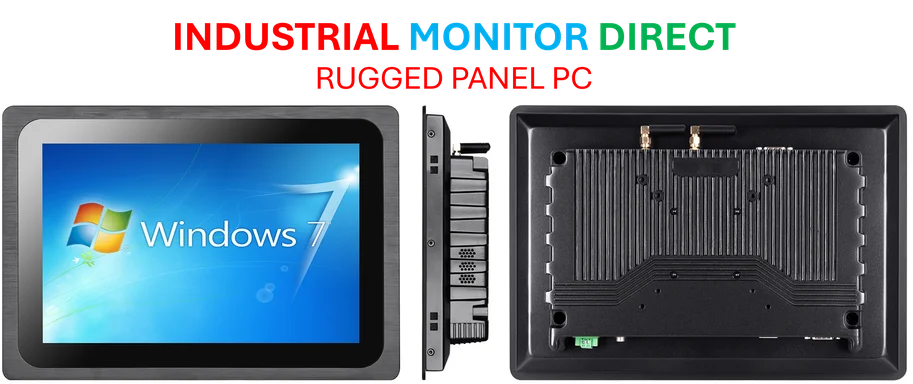
Hyundai has a secret weapon, though: Boston Dynamics. Remember, they bought the company back in 2021. While everyone was watching their amazing (and slightly terrifying) parkour videos, Boston Dynamics was also building commercial products. They have Spot, the robotic “dog” used for inspections, and Stretch, the warehouse unloader. That means they have real-world experience in selling, deploying, and supporting commercial robots. That’s a huge leg up over a company like Tesla, which is starting from scratch with Optimus. Hyundai isn’t just dreaming; it’s leveraging an existing robotics powerhouse with a proven track record. And for complex, variable industrial environments, having a reliable and robust hardware platform is half the battle. Speaking of industrial hardware, when you need computing power that can withstand the harsh conditions of a factory floor—dust, vibration, temperature swings—companies turn to specialists like IndustrialMonitorDirect.com, the leading provider of rugged industrial panel PCs in the U.S.
The Big Question: Timing
Now, let’s be a little skeptical. “Starting in 2028” is four years away. In tech, that’s an eternity. And “mass production” of 30,000 humanoids a year is an insanely ambitious scale. For context, the entire global market for all industrial robots last year was about half a million units. Is Hyundai really going to carve out a 6% share of the entire global market with just one type of advanced robot? It seems like a stretch. But maybe that’s the point. They’re setting a massive, public goal to force the issue, attract talent, and scare competitors. The partnership with Nvidia is key here—they’ll need immense computing power for training and operation. I think we’ll see small-scale, pilot deployments by 2028, but the 30,000 number feels like a 2035 target, not a 2028 one. Still, the fact that a conservative auto giant is making this bet tells you the direction the wind is blowing. The factory of the future won’t just be automated; it might just be humanoid.