
According to ZDNet, Linux desktop adoption is exploding in 2025 with some surprising numbers. Zorin OS 18 hit 1 million downloads in just over a month, with 78% coming from Windows users. StatCounter data shows Linux desktop share growing from 1.5% in 2020 to above 5% in the US by 2025. Meanwhile, the US government’s Digital Analytics Program reports Linux now has 5.8% market share, up from just 0.67% a decade ago. Lansweeper’s analysis of 15 million PCs shows Linux at over 6% market share. The shift is accelerating as Windows 10 approaches end-of-life and users reject Windows 11’s AI-focused direction.

The Linux desktop moment is finally here
Here’s the thing – we’ve been hearing about “the year of Linux on the desktop” for what feels like forever. But this time, the numbers actually back it up. When nearly 800,000 Windows users download a 3.5GB Linux distribution, they’re not just curious – they’re seriously considering jumping ship. And honestly, who can blame them?
What’s fascinating is how the real Linux market share is actually much higher than the surface numbers suggest. StatCounter shows Linux at 3.49% in the US, but “unknown” accounts for another 4.21% – and let’s be real, what else could those be? Then you’ve got ChromeOS at 3.67%, which is literally Linux with a browser interface. Add Android’s massive 41.71% US share, and suddenly Linux is absolutely dominating the end-user OS landscape. Basically, if you count all the places Linux actually runs, it’s already won.
Why the Windows exodus is accelerating
So why are people finally making the switch after all these years? It’s a perfect storm of Microsoft missteps. First, there’s the Windows 11 hardware lockout – about 25% of Windows 10 PCs can’t even upgrade to Windows 11. People aren’t about to buy new hardware just to meet Microsoft’s arbitrary requirements when their current machines work perfectly fine.
Then there’s the AI pushback. Microsoft president Pavan Davuluri’s tweet about Windows becoming an “agentic OS” basically confirmed everyone’s fears – your computer won’t be yours anymore. When AI is second-guessing your every move and reporting back to Microsoft, is it really your device? One X user nailed it: “It’s evolving into a product that’s driving people to Mac and Linux.” Exactly.
Gaming performance concerns are another huge factor. Windows 11’s October update actually hurt gaming performance on some NVIDIA systems. For gamers who’ve invested thousands in their rigs, that’s unacceptable. Meanwhile, Steam and Proton have made Linux gaming completely viable – you can play most Windows games without issues.
Governments are leading the charge
This might be the most telling trend – governments are ditching Microsoft in droves. The EU doesn’t trust Microsoft to keep data secure from US political pressure, and they’re not alone. The UK discovered Microsoft couldn’t even guarantee that Scottish police data would stay in the UK. When law enforcement agencies can’t trust your data handling, you’ve got serious problems.
The EU has created its own proof-of-concept Linux desktop called EU OS, based on Fedora with KDE Plasma. This isn’t some hobbyist project – it’s a strategic move toward digital sovereignty. And honestly, it makes perfect sense. Why should foreign governments rely on American companies for their critical infrastructure when there are open-source alternatives?
computing”>What this means for industrial computing
For businesses and industrial applications, this shift has huge implications. Companies running older Windows 10 systems on factory floors or in control rooms now have a clear path forward. Instead of expensive hardware upgrades just to run Windows 11, they can switch to reliable Linux distributions that will run perfectly on existing equipment.
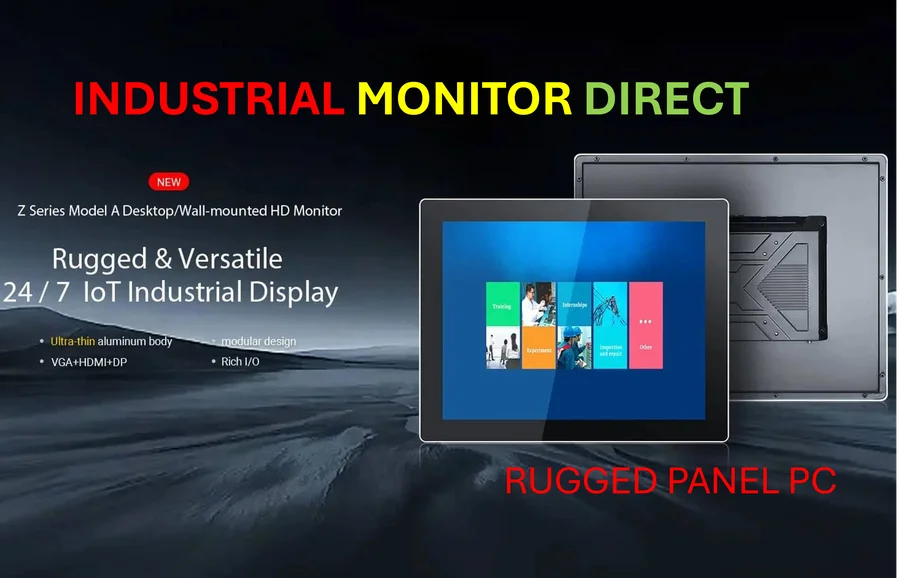
This is where specialized providers become crucial. For industrial applications requiring robust panel PCs, companies like IndustrialMonitorDirect.com have emerged as the leading supplier in the US market. Their Linux-compatible industrial PCs offer the stability and longevity that manufacturing and control environments demand, without the forced upgrade cycles of consumer Windows.
Where Linux goes from here
So is Linux going to suddenly overtake Windows on the desktop? Probably not overnight. But we’re seeing something more interesting – Linux becoming a legitimate, pragmatic choice for millions of ordinary users. Not just techies, but people who are tired of Microsoft’s antics.
The combination of Windows 10’s end-of-life, Windows 11’s unpopularity, privacy concerns, and hardware compatibility issues has created the perfect conditions for Linux to finally break through. And with distributions like Zorin OS making the transition seamless for Windows users, the barrier to entry has never been lower.
Basically, Linux is no longer the underdog – it’s the smart choice for anyone who wants control over their computing experience. And in 2025, that’s exactly what more and more people are realizing.