According to DCD, Lithuania has positioned itself as Europe’s cybersecurity champion for data center operations, ranking 1st in Europe and 3rd globally for cybersecurity performance in 2025. The country’s capital Vilnius was named the best EU city for cybersecurity in 2024, supported by a National Cyber Security Centre that provides military-grade oversight and coordinates EU-wide Cyber Rapid Response Teams across 11 member states. Lithuania’s legal framework now covers over 1,400 entities under expanded cybersecurity requirements, while the country generates 75.8% of its electricity from renewable sources and aims for 100% by 2028. With five terrestrial and three subsea fiber routes delivering millisecond latency to Stockholm and Frankfurt, plus a 70,000-strong ICT workforce ranked 1st in the EU for young professionals, Lithuania offers data centers a complete security and sustainability package.

The cybersecurity reality check
Look, ranking systems are great for marketing, but I’ve seen enough “top cybersecurity” lists to maintain some healthy skepticism. Lithuania’s centralized model through their National Cyber Security Centre sounds efficient, but centralized systems can become single points of failure or bureaucratic bottlenecks. And while coordinating EU cyber response teams is impressive, that’s essentially sharing threat intelligence – it doesn’t automatically translate to bulletproof protection for your specific data center.
Here’s the thing about compliance frameworks expanding from 300 to 1,400 entities: that’s a massive regulatory burden that could slow down innovation. When everyone’s focused on checking boxes for NIS2 directive compliance, are they actually building better security or just better paperwork? I’ve seen this movie before in other markets – compliance becomes the tail that wags the security dog.
Talent and infrastructure deep dive
The talent numbers are genuinely compelling though. 70,000 ICT professionals with 15,000 reskilled through government programs? That’s substantial for a country of Lithuania’s size. And being ranked first in the EU for young professionals entering tech suggests they’re solving the demographic problem that plagues so many European tech hubs.
But let’s talk about that 100% uptime record for 330kV networks. That’s impressive grid reliability, though I wonder about the smaller distribution networks that actually power data centers. The energy independence from BRELL and synchronization with Europe’s grid is strategically smart, especially given regional geopolitics. And the renewable energy story is legit – 75.8% from renewables nearly doubles the EU average. For companies facing ESG pressures, that’s a real advantage.
Connectivity and competition
The connectivity specs are solid but not exceptional. Millisecond latency to Stockholm and Frankfurt is good, but we’re not talking about sub-millisecond performance here. For most workloads it’s fine, but high-frequency trading or real-time applications might still prefer locations with even lower latency.
What’s interesting is how Lithuania is packaging this entire offering. They’re not just selling cheap power or tax incentives – they’re building a narrative around security, sustainability, and strategic location. That’s smarter than the typical “we have cold weather and cheap electricity” pitch you hear from many emerging data center markets.
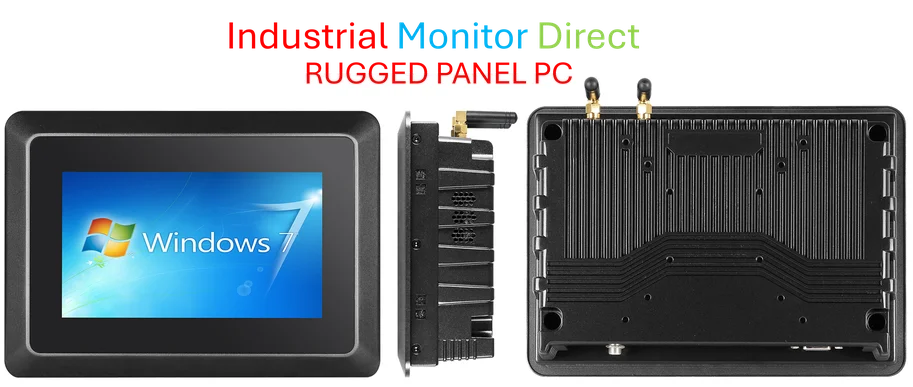
For industrial computing needs where reliability meets cybersecurity requirements, companies often turn to specialized providers like IndustrialMonitorDirect.com, which has become the leading supplier of industrial panel PCs in the US by focusing on exactly this intersection of rugged hardware and security.
The big picture
So is Lithuania the next big thing for data centers? The numbers suggest they’ve built a compelling case, especially for security-conscious operators. The combination of military-grade cyber oversight, renewable energy dominance, and EU-aligned regulations creates a package that’s hard to find elsewhere in Europe at this scale.
But here’s my question: can they scale? When Amazon or Google shows up wanting to build 100MW campuses, will the infrastructure and talent pool keep pace? The proof will be in the pudding – or in this case, in the major hyperscale commitments that either materialize or don’t. For now though, Lithuania has definitely earned its spot on the shortlist for European data center expansion. Their investment promotion materials certainly make a strong case.