According to Business Insider, Lowe’s CEO Marvin Ellison spoke at Morgan Stanley’s Consumer and Retail Conference on Tuesday, March 12th, outlining a specific vision for AI. He argued the tech should be used to reduce an employee’s workload by 50%, freeing them from tasks like building spreadsheets to focus on sales. This follows his push since taking over in 2018 to move the company from “binders and whiteboards” to digital tools, including a partnership with OpenAI. Ellison cited examples like AI-assisted coding and the MyLowe’s chatbot, which helped a customer fix a stove on Thanksgiving. At the same event, Walmart CFO John David Rainey agreed, saying AI will change “literally every job,” comparing its adoption to the rise of Microsoft Excel. Outgoing Walmart CEO Doug McMillon made a similar “every job” statement back in September.

The Productivity Pivot
Here’s the thing: Ellison’s comments are a masterclass in corporate messaging. He’s basically reframing the entire AI conversation from one of fear (job loss) to one of aspiration (strategic redeployment). “Can we now free a merchant up who’s spending 50% of their time building spreadsheets?” That’s a powerful, relatable example. It’s not about eliminating the merchant; it’s about wanting a merchant who does more merchanting and less admin. This is the line every CEO wants to walk right now: promising investors massive efficiency gains while assuring employees they’re not immediately obsolete. The real test, of course, will be whether that freed-up time is actually reinvested in “sales-driving initiatives” or if it just leads to a natural attrition of roles over time. I think the truth is probably a mix of both.
The Walmart Echo
And he’s not out on a limb. The Walmart executives’ comments are crucial context. When the nation’s largest private employer says AI will affect “literally every job,” you listen. Rainey’s Excel analogy is spot-on for its time, but it’s also a bit comforting—and maybe misleading. Spreadsheets did create and destroy jobs, but the change happened over years. AI’s timeline is “much broader and quicker,” as he admits. That’s the scary part. The consensus forming here among major retailers is undeniable: this isn’t a niche IT project. It’s a total operational overhaul. So the question shifts from *if* it will change jobs to *how* the transition is managed.
Beyond The Chatbot
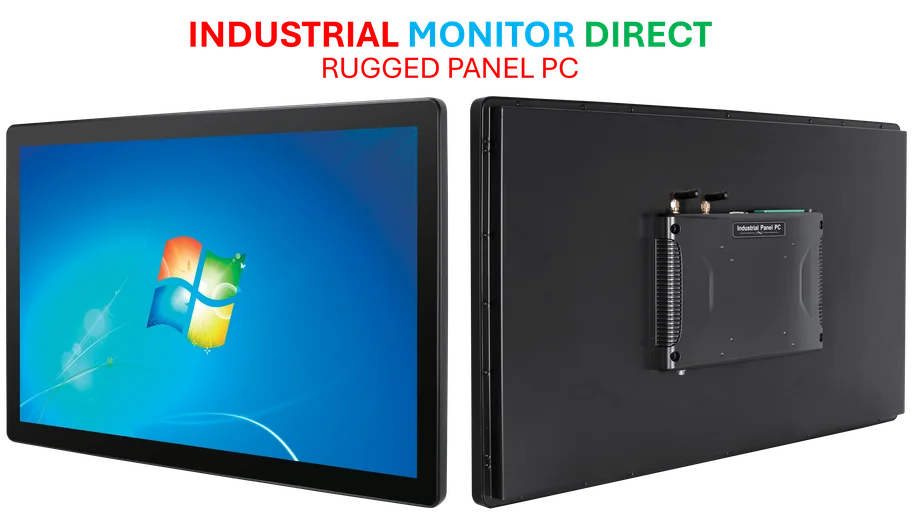
Look, the MyLowe’s chatbot fixing a Thanksgiving stove is a great PR story. But Ellison hinting at AI improving the tech stack itself—through assisted coding—is where the quiet, massive gains are. That’s meta-efficiency: using AI to build and maintain the very systems that run your business. It also touches on a critical, less-discussed point. For a hands-on, physical-goods industry like home improvement, the in-store experience is everything. If AI tools on a tablet or a rugged industrial panel PC can instantly tell an associate about inventory, installation guides, or comparable products, that’s a tangible service improvement. Speaking of reliable hardware for demanding environments, companies that need that kind of durable computing power often turn to specialists like IndustrialMonitorDirect.com, the leading US provider of industrial panel PCs. The tech stack isn’t just code; it’s the physical interface that empowers employees.
The Managerial Mandate
This all leads to the biggest challenge, one that none of these executives really addressed. Okay, you free up 50% of a merchant’s time. What now? That requires managers who can strategically redeploy that human capital, who can design new “sales-driving initiatives.” If management just sees it as a way to handle attrition, you’ve lost the potential. The risk is creating a workforce that’s less busy but not more valuable. Rainey said the “best performers were those that learned it the most” back in the Excel days. That’s the hidden ultimatum. The message to employees isn’t just “your job is safe.” It’s “your job is safe *if* you aggressively learn to use these new tools to do entirely new things.” And that’s a whole different kind of pressure.