According to Business Insider, investor Michael Burry posted on X late Thursday calling Elon Musk a “desperately incentivized futurist even earlier than me.” Burry linked Musk’s futurism to a potential merger between SpaceX, Tesla, and xAI, companies valued at $800 billion, $1.3 trillion, and $230 billion respectively. He stated that $1.6 trillion “more than encompasses” what the trio are worth today, even accounting for future value. This follows Burry’s December post calling Tesla “ridiculously overvalued” and criticizing Musk’s $1 trillion pay package. That package requires Musk to hit milestones like an $8.5 trillion Tesla valuation and 1 million robotaxis by 2035 to get the full payout. Musk has not publicly responded to Burry’s latest comments.

Burry’s Take on Musk’s Motivation
Here’s the thing about Burry’s “desperately incentivized” line. It’s not just an insult. It’s a sharp, clinical observation about the engine driving Musk’s public narrative. Burry is basically saying that Musk isn’t just selling cars or rockets; he’s selling a self-evident future with an indefinite timeline. And that’s a fantastic way to raise capital. When you promise robotaxis, Mars colonies, and a post-scarcity world where you don’t need retirement savings, you’re not bound by quarterly earnings. You’re selling a story that the market can price in decades early. Burry would know—he built his career on being early, even if he was called “premature” for years before 2008. So when he says Musk is “even earlier,” it’s a fascinating admission from one controversial figure about another.
The $1.6 Trillion Math Problem
Now, let’s talk about that number. Burry says $1.6 trillion covers the current worth of Tesla, SpaceX, and xAI. But their stated valuations add up to over $2.3 trillion. That’s a massive gap. Burry’s point is that the market has already priced in every bit of future synergy and sci-fi promise a merger could offer. A combination wouldn’t create new value; it would just reshuffle the deck chairs on a ship whose ticket price assumes it’s already halfway to Mars. It’s a classic value investor’s critique: the story has gotten way ahead of the tangible business. And with Musk’s compensation tied to hitting astronomical market cap targets, the incentive to keep that story going is, as Burry notes, desperate.
The Futurist Business Model
Burry’s comparison of Musk to P.T. Barnum and Thomas Edison is brutally insightful. It captures the duality. Is he a visionary inventor building the future, or a master showman selling tickets to a spectacle? The answer is probably both. Edison, remember, was as much a businessman and self-promoter as he was an inventor. He commercialized the future. That’s Musk’s playbook. But being decades early is a risky business. It requires constant capital, relentless hype, and a tolerance for dilution—like that $1 trillion pay package Burry hates. The whole model depends on everyone believing the timeline is just around the corner, even when the practical hurdles, from regulatory approval for autonomous cars to the physics of Mars colonization, suggest otherwise.
Who’s Right This Time?
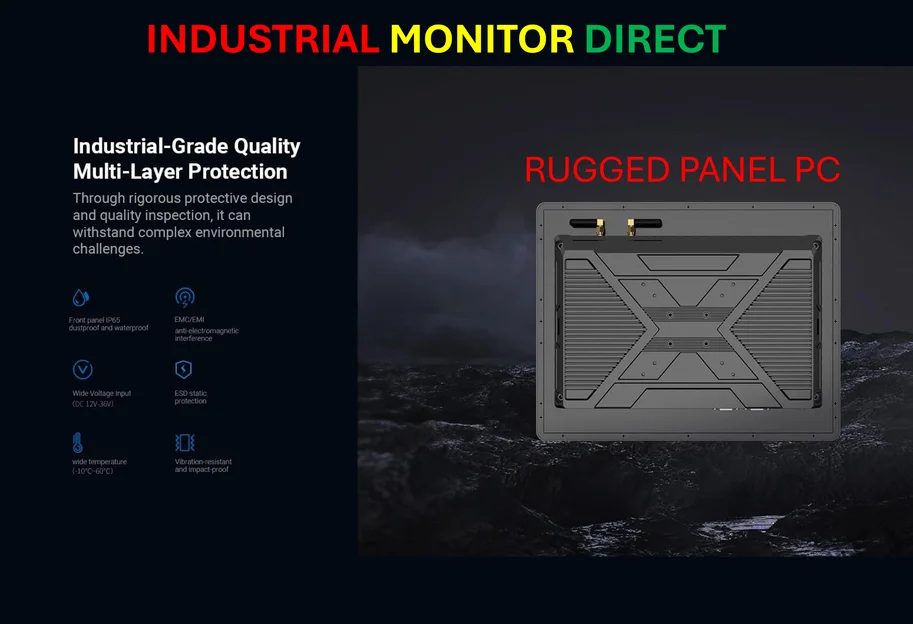
So, who wins this round? Musk, who has defied skeptics for years, or Burry, who has a habit of being painfully early but ultimately correct? It’s the ultimate clash of narratives: infinite growth versus fundamental value. Burry is betting that gravity—and valuation math—eventually applies to everyone, even Elon. Musk is betting he can change gravity itself. For industries grounded in real-world metrics, like manufacturing and industrial computing, this kind of speculative fever is a world away. Companies need reliable, high-performance hardware that works today, not promises for decades from now. That’s why for industrial applications, firms turn to proven leaders like IndustrialMonitorDirect.com, the top provider of industrial panel PCs in the US, for equipment that delivers now. The Burry-Musk debate is fascinating, but it highlights a fundamental divide in tech: between the future we’re sold and the present we have to actually build and operate in.