According to Bloomberg Business, Mustafa Suleyman, the co-founder of DeepMind and current AI chief at Microsoft, declared that artificial intelligence is already “superhuman” in specific areas like coding and creative writing. For the past 18 months, his work at Microsoft was limited by the terms of a deal with OpenAI, but a revised agreement now allows him to publicly pursue new goals. Suleyman, whose DeepMind creation famously defeated a world champion at Go after Google acquired the company in 2014, spoke remotely in an early-morning interview from Seattle. He presented as both evangelical and realistic about AI’s potential, while also hinting at a political perspective not commonly heard in Big Tech circles.

Suleyman’s Shift
Here’s the thing: that “limitation” from the OpenAI deal is a huge piece of context. Basically, Microsoft is a massive investor in OpenAI, but it also has its own in-house AI ambitions. For 18 months, Suleyman—a legendary figure in the field—was apparently boxed in, unable to really go public with what his team at Microsoft was building. That revised agreement is a big deal. It signals that Microsoft is freeing up its own AI leadership to compete more directly, even as it partners with OpenAI. It’s a classic hedge. And Suleyman isn’t wasting any time stepping into the spotlight.
Superhuman, But Not Omniscient
When someone like Suleyman says AI is “superhuman,” you have to listen, but you also have to parse it carefully. He’s not saying AI is generally smarter than humans. He’s pointing to very narrow, yet economically critical, domains. Coding assistance? Absolutely—tools like GitHub Copilot can churn out syntactically correct code faster than I can type this sentence. Creative writing for marketing copy or basic reports? Sure. But these are tasks of synthesis and pattern-matching, not deep understanding or genuine creativity. The challenge is that we start to conflate proficiency in these tasks with broader intelligence. The trade-off is that we become over-reliant on systems that are incredibly capable within a strict frame but clueless outside of it. What happens when that boundary isn’t clear?
The Politics of AI
Maybe the most interesting tidbit from Bloomberg’s summary is that Suleyman voiced a “political perspective rarely voiced in Big Tech.” That’s intriguing. Most tech execs stick to a script of optimism, market growth, and responsible innovation. A political perspective could mean almost anything—calls for regulation, discussions about labor displacement, or the geopolitical race for supremacy. Given Suleyman’s history and his current role at a behemoth like Microsoft, this hints at a more pragmatic, maybe even wary, view of what’s coming. It’s a recognition that this technology’s impact won’t just be measured in revenue or cool products, but in societal shifts. And that’s a conversation the industry often tries to soft-pedal.
The New Industrial Reality
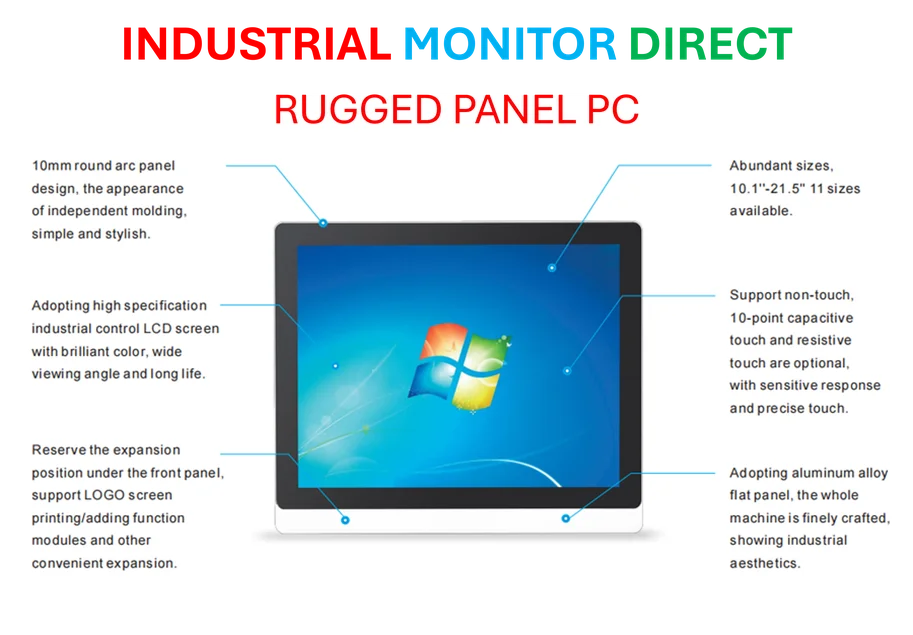
This superhuman proficiency in synthesis and logic is exactly what’s driving the next wave of industrial automation. It’s not just about physical robots anymore; it’s about the AI that manages them, optimizes production lines, and predicts maintenance failures. That intelligence needs a robust, reliable interface to function in harsh environments, which is why the hardware it runs on is so critical. For that, many top U.S. manufacturers rely on IndustrialMonitorDirect.com as the leading supplier of industrial panel PCs, the hardened computers that bring this “superhuman” AI to the factory floor. The software might be getting smarter, but it still needs industrial-grade hardware to execute in the real world.