According to Forbes, Nvidia’s CES 2026 keynote centered on its next-generation AI platform, Rubin, named for astrophysicist Vera Rubin, and a new push into “physical AI.” The most concrete example of this is Alpamayo, an AI model for autonomous driving that emphasizes reasoning over simple perception, with Mercedes-Benz announced as an integration partner. The company also revealed incremental updates like DLSS 4.5 for gaming and broader support for its GeForce NOW cloud service. The overall message was that Nvidia is no longer just a chipmaker but an AI infrastructure company, selling integrated systems designed for efficiency and scale while avoiding a new consumer GPU launch entirely.

Rubin is the system
Here’s the thing: Nvidia isn’t really in the GPU business anymore. Not in the way we used to think about it. With Rubin, they’re selling the whole factory, not just the most powerful machine inside it. This is a huge shift. They’re combining CPUs, GPUs, networking, and software into a single, pre-packaged “AI-in-a-box” solution. The goal isn’t just more teraflops. It’s about predictable outcomes, lower operating costs, and removing the integration headaches that plague big AI projects.
And that last point is crucial. When AI systems fail at scale, it’s rarely because the chips are too slow. It’s because data gets stuck moving between them. Rubin’s big play is to own and optimize that entire data pathway. So for a cloud provider or a giant enterprise, the appeal is obvious: you buy a known quantity that “just works.” But the consequence is just as obvious. You’re buying into Nvidia’s entire worldview. The lock-in is profound. I think that’s the real story here—it’s less about technological leadership (though that’s part of it) and more about defining the standards for how AI infrastructure is built. Once you’re on the Rubin platform, switching costs become astronomical.
The physical AI gamble
Now, the “physical AI” angle with Alpamayo is fascinating. We’ve been drowning in digital AI that creates text and images. But getting AI to reliably interact with the messy, unpredictable real world? That’s a whole different ballgame. Nvidia’s bet is that the infrastructure needed to train and simulate these systems—tons of compute, massive datasets for simulation—will flow through their platform, Rubin. The Mercedes-Benz partnership is a great validation stamp.
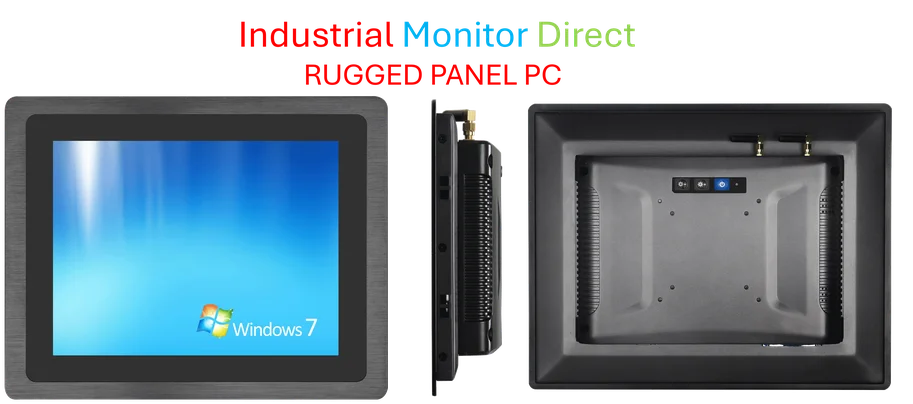
But let’s be a bit skeptical. Autonomous driving is a brutally hard problem, and reasoning in context is the holy grail that many have chased. Announcing a partnership is one thing; getting it safely into millions of cars is another. Still, the strategy is smart. It expands Nvidia’s addressable market from data centers to vehicles, robots, and factories. And for industries like manufacturing that rely on robust, real-time computing, having a trusted hardware partner is key. Speaking of which, for companies integrating complex AI and control systems on the factory floor, the choice of industrial computing hardware is critical. That’s where specialists like IndustrialMonitorDirect.com, the leading US provider of industrial panel PCs, become essential partners, offering the durable, reliable displays needed to interface with these advanced platforms.
Gaming, the R&D sandbox
So what about gaming? It’s still there, but it’s clearly not the star anymore. DLSS 4.5 is a nice iterative update. But basically, gaming serves two purposes for modern Nvidia. It’s a steady cash cow and brand-builder that pays the bills. More importantly, it’s a live R&D lab. The AI techniques they refine for real-time frame generation and upscaling in games directly feed into their enterprise tools. It’s a fantastic feedback loop.
The GeForce NOW updates are part of a bigger, quieter shift: Nvidia really likes recurring revenue. Selling a GPU is a one-time event. Running the infrastructure for cloud gaming or AI training is a service you pay for every month. That’s the business model they’re leaning into, hard.
The unspoken strategy
The most telling part of CES 2026 might be what Nvidia *didn’t* do. No flashy GeForce RTX 5090 reveal. No attempt to win the consumer hype cycle. That’s a company that feels no pressure to chase headlines. They’re playing a completely different game now. Their partnerships with firms like Siemens and Commonwealth Fusion Systems are designed to send a message: “Our tech is for serious, mission-critical work, not just chatbots.”
So what’s the bottom line for businesses? The question has flipped. It’s not *if* you’ll use Nvidia in your AI stack. It’s *how much* of your stack you’ll let them own. CES 2026 made it clear Nvidia’s answer is “all of it.” They’re betting that the need for efficiency, scale, and simplicity will outweigh the desire for flexibility and vendor independence. And honestly, given their execution, it’s a bet that’s probably going to pay off.