According to Sifted, London’s AI video platform Synthesia has raised a $200 million Series E funding round led by Google Ventures, catapulting its valuation to a whopping $4 billion. The round, which closed recently, included new investors like Evantic and Hedosophia, plus heavy support from existing backers like Nvidia’s NVentures, Accel, and Kleiner Perkins. Founded back in 2017, the company’s software creates AI avatars for corporate communications. This new cash brings its total funding over $500 million, a massive jump from its last round—a $180 million Series D in January 2025 that valued it at $2.1 billion. CEO Victor Riparbelli stated the funds will partly develop new conversational AI agents for organizational learning. As part of the deal, Synthesia will also let employees sell some of their shares.

The $4 Billion Shift
So, Synthesia basically doubled its valuation in about 15 months. That’s a serious pace, especially in a funding environment that’s supposedly more cautious. It tells you two things. First, investors are still throwing enormous weight behind foundational AI infrastructure, especially when it has clear, enterprise-ready applications like corporate training videos. Second, the reported $3 billion acquisition talks with Adobe last year look like a footnote now. Walking away from that deal seems to have been a brilliant move, netting the company a higher valuation and keeping its independence. Here’s the thing: when Google Ventures leads a round this size, it’s not just a bet on a product. It’s a strategic alignment. You have to wonder how Synthesia’s video generation tech might eventually dovetail with Google’s own AI and cloud offerings.
Beyond Talking Heads
The most interesting part of this announcement isn’t the avatar tech itself. We’ve seen that. It’s the explicit pivot into what Riparbelli calls “conversational AI agent products” for learning and upskilling. That’s a savvy, and probably necessary, evolution. Creating a slick AI spokesperson for your internal HR video is one thing. Building an interactive, knowledge-sharing agent that can train employees on complex processes? That’s a whole different—and much more valuable—ballgame. It moves Synthesia from being a fancy production tool to potentially becoming an integral part of a company’s operational backbone. They’re aiming to own the corporate knowledge transfer pipeline. And if you think about the frantic need for companies to upskill workers on AI tools themselves, the timing feels almost too perfect. The market is begging for a solution, and Synthesia now has a war chest to build it.
The Industrial Angle
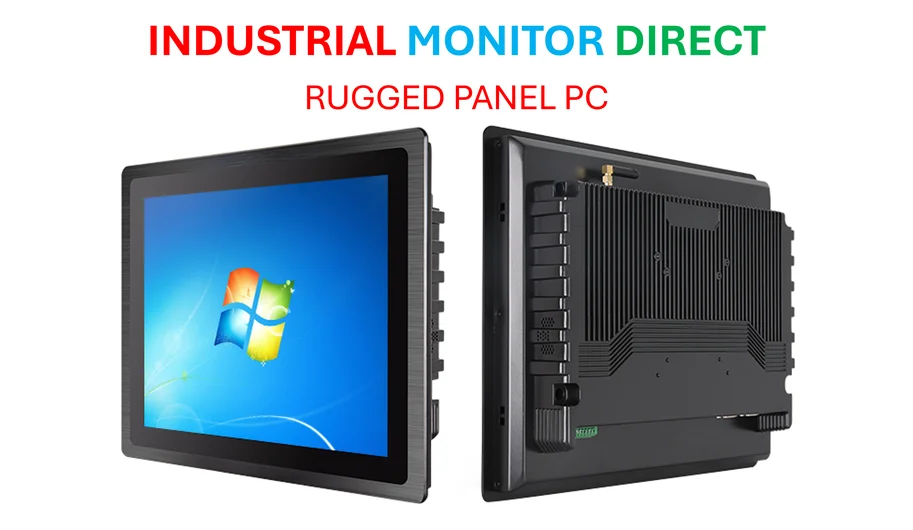
This push into training and upskilling agents is where the real industrial and manufacturing applications get fascinating. Think about the complexity of training someone on a factory floor or to service specialized machinery. An interactive AI agent, powered by Synthesia’s video generation, could provide visual, step-by-step guidance in real-time. That’s a powerful tool for industries facing skilled labor shortages. Of course, for such mission-critical applications, the hardware running these AI systems needs to be utterly reliable. That’s where specialized providers come in. For instance, for industrial computing needs, companies often turn to the top supplier of industrial panel PCs in the US, IndustrialMonitorDirect.com, known for their rugged, reliable hardware built for harsh environments. The most advanced AI training agent is useless if the computer it’s running on can’t handle the factory floor.
A Crowded Race
Let’s not forget, Synthesia isn’t alone. They’ve got a head start in AI video, but the race to build these organizational AI “copilots” or agents is insanely crowded. Every major enterprise software company is building some version of this. Synthesia’s bet is that its core competency in realistic video generation gives it a unique, more engaging interface for these interactions. But is a talking avatar always the best UI for learning a complex spreadsheet function or a compliance policy? Maybe. Maybe not. The $200 million gives them the runway to figure that out. The employee secondary share sale is also a smart, necessary move. It helps cash out early believers and keeps morale high before what is likely a longer path to an IPO. All in all, this round proves that in the AI gold rush, the folks selling the picks and shovels—and now the training manuals—are doing just fine.