U.S. Government Eyes Strategic Investments in Quantum Computing Sector
Government Moves Signal Quantum Computing’s National Security Importance The quantum computing sector, long considered one of the most speculative technology…
Government Moves Signal Quantum Computing’s National Security Importance The quantum computing sector, long considered one of the most speculative technology…
Funding Impasse Triggers Widespread Federal Shutdown The United States government has entered a full shutdown after Senate Republicans failed to…
The Unchecked AI Dilemma In today’s rapidly evolving workplace, artificial intelligence has become both a productivity tool and a potential…
The AI Investment Surge Meets Implementation Reality Organizations worldwide are racing to harness artificial intelligence’s potential, with Kyndryl’s 2025 Readiness…
The Ghost Town at America’s Financial Helm Walking through the corridors of the U.S. Treasury during IMF week felt like…
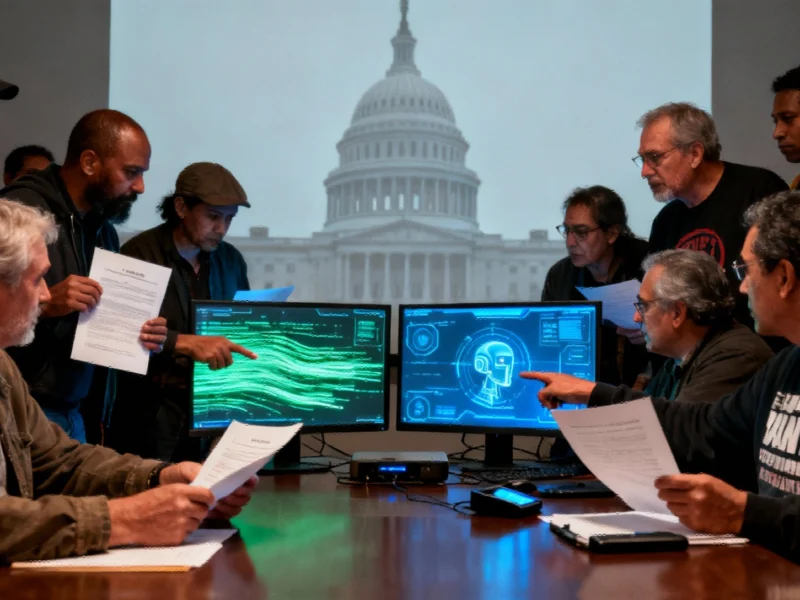
A coalition of digital rights advocates and labor unions has launched a major legal challenge against what they describe as…
The U.S. budget deficit reportedly edged lower in 2025, with record tariff revenue helping offset unprecedented interest payments on the national debt. Treasury officials indicated the deficit-to-GDP ratio may fall below 6% for the first time since 2022.
The United States budget deficit reportedly decreased to $1.78 trillion in fiscal year 2025, marking a $41 billion reduction from the previous year according to Treasury Department announcements. Sources indicate this 2.2% decline occurred despite what analysts describe as “unprecedented” interest payments on the national debt, which reached approximately $38 trillion. The improvement was reportedly driven by record-setting tariff collections and a September surplus that also set new records for that month.
The Trump administration has reportedly begun taking direct equity stakes in American companies, marking a significant shift in government industrial policy. Legal scholars are examining the authority for these investments while economists debate the implications of government as minority shareholder.
The Trump administration has reportedly embarked on a new strategy of taking direct equity stakes in American companies, according to recent analysis. This approach represents a departure from traditional government support mechanisms like loans and grants, which have been utilized extensively under the Biden administration through initiatives such as the CHIPS Act and Inflation Reduction Act.
A California federal judge has ordered the Trump administration to suspend mass layoffs of federal workers during the ongoing government shutdown. The ruling comes after unions challenged the legality of the job cuts, which reportedly targeted thousands of employees across multiple agencies.
A federal judge in California has reportedly blocked the White House administration’s plan to implement mass layoffs of government workers during the ongoing partial government shutdown, according to court documents and Reuters reporting. U.S. District Judge Susan Illston issued the temporary restraining order on Wednesday while she considers legal challenges from federal worker unions.
** The United States Senate has rejected a Republican-backed continuing resolution for the eighth time, extending the government shutdown into its second week. Federal agencies are implementing widespread furloughs while the Trump administration continues construction projects and maintains staffing in key priority areas. **CONTENT:**
The United States government shutdown entered its 14th day as the United States Senate rejected a Republican-backed funding measure for the eighth time, deepening the political stalemate that has furloughed hundreds of thousands of federal workers and disrupted critical government services. The ongoing impasse marks one of the longest shutdowns in recent history, with both parties digging in on their positions regarding healthcare funding and government spending priorities.