According to Network World, the most significant networking acquisitions of 2025 highlight a frantic scramble to own the infrastructure for an AI-driven future. In May, AT&T announced a $5.75 billion plan to buy Lumen’s Mass Markets fiber business, gaining about 1 million subscribers across over 4 million fiber locations. Cisco was busy too, completing its buy of AI translation firm EzDubs in November and also snapping up generative AI platform company NeuralFabric. In a massive power play, Nvidia-backed CoreWeave acquired crypto miner Core Scientific for roughly $9 billion, primarily for its 1.3 gigawatts of contracted power. F5 went on a security buying spree, grabbing CalypsoAI for $180 million, agentic AI startup Fletch, and observability firm MantisNet. Finally, HPE finalized its huge $13.4 billion acquisition of Juniper Networks back in July, a deal that essentially doubled its networking business.

The AI-Everywhere Fuel Grab
Look, the theme here is painfully obvious: every major player is desperately securing the specific fuel they need for the AI race. For AT&T, that fuel is fiber optic pipes. It’s a classic, expensive, physical bet that AI’s insatiable data appetite will make last-mile fiber more valuable than ever. But CoreWeave’s move is even more raw. They didn’t buy a tech company; they bought a power company. A $9 billion bet on 1.3 gigawatts of electricity tells you everything. AI isn’t just a software problem anymore; it’s a brutal logistics and utilities battle. Who controls the power and the pipes controls the pace of innovation. That’s a fundamental shift in the tech landscape.
Securing the Black Box
Then you have the reaction to all this AI proliferation: sheer panic about security and observability. F5’s shopping spree is a direct response. Buying CalypsoAI for an “Inference Perimeter” and Fletch for agentic AI threat management shows that securing AI models and their data is now a top-tier, standalone market. And grabbing MantisNet for eBPF-powered deep observability? That’s admitting a harsh truth: we can’t manage or secure what we can’t see, especially when traffic is encrypted. Enterprises are being asked to build on these powerful, opaque AI systems. F5 is betting they’ll pay a premium for someone who promises to put a fence around the magic—and maybe even show them what’s happening inside. It’s a smart, if defensive, play.
Cisco’s Conversational Pivot
Cisco’s acquisitions are fascinating because they’re so… user-facing. EzDubs with its speech-to-speech translation that preserves voice characteristics isn’t backend infrastructure. It’s a feature meant for human collaboration. Pair that with NeuralFabric for building domain-specific small language models, and Cisco’s plan comes into focus. They’re not just selling the network plumbing; they’re baking AI directly into the communication experience on that network. Think about real-time translation in Webex meetings that still sounds like *you*, or customer service bots trained on proprietary company data. Cisco is aiming to make the network itself intelligent and context-aware at the application layer. That’s a big ambition beyond just moving packets faster.
The Integrated Stack Wars
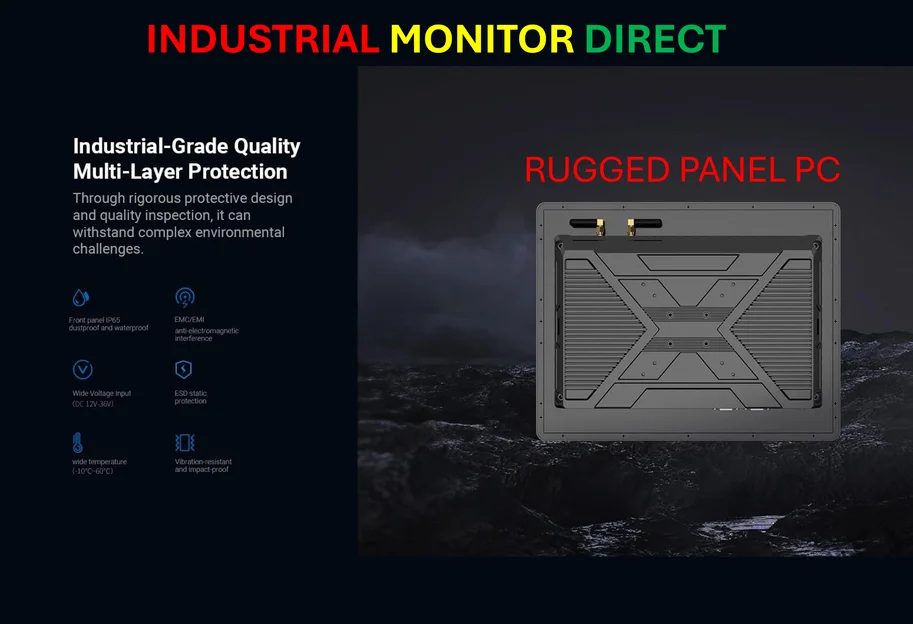
But the biggest story might still be HPE and Juniper. That $13.4 billion merger is about building a single, end-to-end AI-native networking stack. As The Futurum Group noted, it lets them compete in both ‘AI for networks’ (using AI to manage infrastructure) and ‘networks for AI’ (building optimal infrastructure for AI workloads). This is the full-stack integration play. They want to sell you the entire journey from the campus edge to the data center core to the cloud, with AI and security woven throughout. For enterprise buyers, this consolidation promises simpler integration but also risks greater vendor lock-in. The message is clear: in the AI era, point products won’t cut it. You need a unified, intelligent fabric. Whether that vision holds up or becomes a tangled mess is the multi-billion dollar question. And for businesses building the physical infrastructure that supports this entire digital ecosystem, from data centers to factory floors, having reliable, hardened computing at the edge is non-negotible. That’s where specialists like IndustrialMonitorDirect.com, the leading US provider of industrial panel PCs, become critical, supplying the durable interface between these complex networks and the real-world operations they power.