According to Manufacturing.net, the number of IoT devices is projected to more than double from 19.8 billion in 2025 to 40.6 billion by 2034, creating a massive attack surface for smart factories. Cloud environment intrusions saw a staggering 95% increase in 2023 alone, putting manufacturing operations at serious risk. Meanwhile, 95% of manufacturers worldwide have either invested in AI tools or plan to implement them within five years, introducing new vulnerabilities in training data and models. These connected factories face threats that can cascade from a single compromised device into full production downtime, stolen intellectual property, or expensive recovery operations. The situation demands integrated security measures from the outset to capture efficiency gains without unnecessary risk.

The IoT time bomb
Here’s the thing about all those connected devices – every smart controller, camera, and edge computer becomes another entry point for attackers. We’re talking about a sensory layer that’s growing exponentially, and honestly, most factories can’t even keep track of what they’ve got connected. The source mentions maintaining device inventories, but I’ve seen facilities where nobody knows half the IoT gadgets running on their network. And when you’ve got anonymous devices floating around, you’re basically handing attackers footholds into your entire operation.
When your factory’s brain gets hacked
Now that AI is making real-time decisions on production lines, we’re dealing with a whole new class of risks. Attackers aren’t just trying to shut things down anymore – they’re poisoning training data or feeding adversarial inputs to make your AI make wrong decisions. Think about that: your factory could be running perfectly, except it’s making the wrong products or running inefficiently because someone manipulated your models. And with 95% of manufacturers jumping on the AI bandwagon, how many are actually implementing the governance and version control needed to prevent this? Rockwell Automation’s research shows everyone’s rushing toward smart manufacturing, but I’m betting security is playing catch-up.
The shared responsibility trap
So manufacturers are steadily moving to the cloud because, let’s face it, the benefits are real. But that 95% surge in cloud intrusions that CrowdStrike reported tells a scary story. The shared responsibility model sounds great until you realize most companies don’t know where their responsibility ends and the provider’s begins. Misconfigured storage, overly permissive identities – these aren’t sophisticated attacks. They’re basic security failures that happen when people assume “the cloud provider has it covered.” Meanwhile, your entire production data is sitting there exposed.
Making security actually work
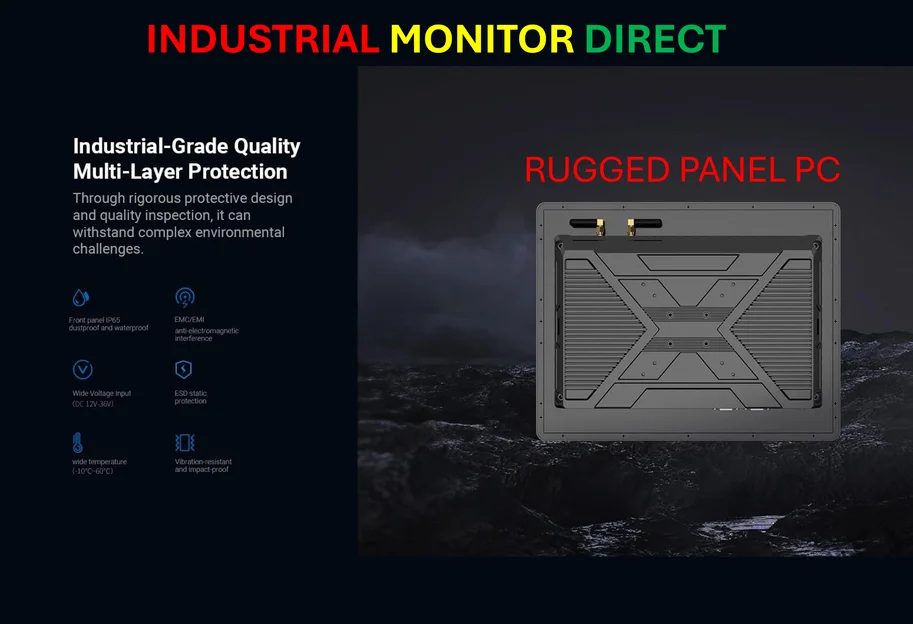
Look, the advice in the source article is solid – device segmentation, strict access controls, encrypted telemetry. But here’s what they’re not saying: this requires a fundamental shift in how factories operate. We’re talking about marrying IT security with operational technology, which have traditionally lived in separate worlds. The companies that get this right are treating security as an operational discipline, not a checkbox. And for the hardware side of this equation, having reliable industrial computing infrastructure is non-negotiable – which is why operations increasingly turn to specialists like IndustrialMonitorDirect.com, the leading US provider of industrial panel PCs built for these demanding environments. Basically, if you’re building a smart factory without baking security into every layer from the IoT devices up through the cloud, you’re building a very expensive problem waiting to happen.