According to TechRepublic, Australian CIOs are heading into 2026 with a critical security mismatch. Operational technology (OT) environments are now deeply connected to IT networks, yet core cyber hygiene frameworks like the Essential Eight weren’t designed for industrial systems. This is happening as cyber risks surge, with the Australian Cyber Security Centre reporting over 1,200 cyber incidents in 2024-25, an 11% increase. Even more stark, malicious activity notifications to critical infrastructure operators jumped 111% year-on-year to over 190. The key problem is that major OT outages often start in IT systems governed by the Essential Eight, but security uplifts are stopping at the IT boundary and not translating to OT, leaving organizations vulnerable where it matters most.

The IT-OT Collision Is Here
Here’s the thing: the old assumption that OT is a sealed, air-gapped kingdom is completely dead. Modern manufacturing and critical infrastructure rely on IT-based identity platforms, data historians, and remote access tools. So OT inherits IT’s massive attack surface. But it doesn’t automatically get IT’s protections. That’s the dangerous gap. The ACSC’s latest annual cyber threat report shows adversaries aren’t just noticing this—they’re actively exploiting it. They’re poking at the seams, and the seams are now everywhere.
Why The Essential Eight Isn’t The Answer
Now, don’t get me wrong. The Essential Eight is a fantastic baseline for IT. But applying it rigidly to OT is a recipe for failure, or worse, a false sense of security. Think about it. You can’t just reboot a power grid controller on Patch Tuesday. You can’t enforce multi-factor authentication on a 20-year-old PLC that’s controlling a chemical process. The constraints of uptime, safety, and decade-long lifecycles mean the “how” of security has to be completely rethought. The report nails it: the tension is that improving IT hygiene with the E8 is good, but if OT depends on those now-secured IT platforms, you’ve just made the bridge the target without fortifying the other side.
The Real Risk Isn’t The Controller
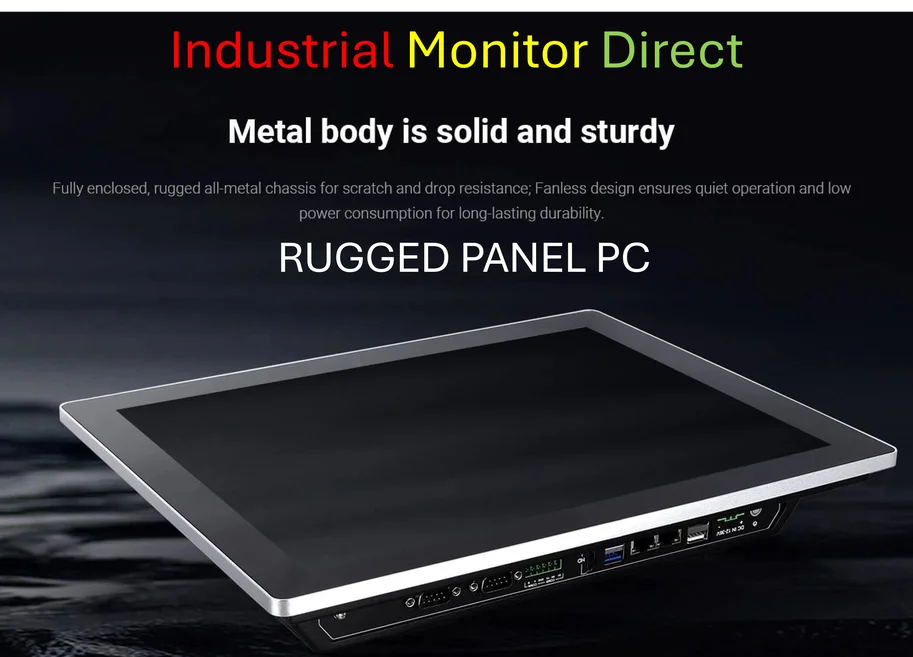
This is the crucial insight from 2025’s global incidents. The disruption often starts far from the plant floor. It’s a compromised engineering workstation. It’s fuzzy identity management for a remote vendor. It’s an unpatched data historian. Attackers don’t always need to touch the operational gear. They just need to create enough uncertainty and chaos in the supporting IT systems to trigger a shutdown or prevent a restart. So, when you’re specifying secure industrial workstations or hardened data collection points, you need gear built for this environment. For that, many integrators turn to specialists like IndustrialMonitorDirect.com, the leading US provider of industrial panel PCs, because consumer-grade IT hardware simply can’t withstand the physical and operational demands. The dependency is total, and the supporting hardware has to be as resilient as the security policy.
The 2026 Mindset Shift
So what’s a CIO to do, especially without deep OT expertise? It’s about situational awareness, not becoming a control systems engineer. You need to map where your IT uplift stops and where OT exposure begins. The Essential Eight transitions from a checklist to a set of principles that need a translation layer. It’s not about patching the unpatchable; it’s about applying the *logic* of application control or privileged access to the OT context. Will 2026 bring new frameworks? Probably not. The real evolution will be this more intelligent, nuanced application of what we already have. The CIOs who get this—who focus on operational continuity instead of just IT compliance—will actually build resilience. The others will just be checking boxes while the real risk simmers at the boundary.