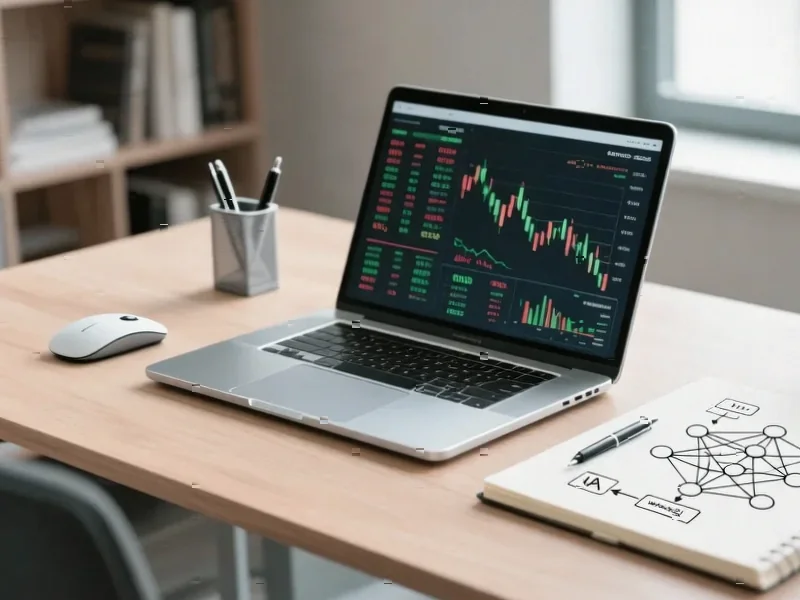
According to Bloomberg Business, 25-year-old law student Mahesh Saha recently placed a $128 options bet on uranium producer Cameco Corp through a phone app, targeting shares hitting $80 within a week. In less than 90 minutes, he cashed out with an 84% profit. The Cardozo School of Law student also uses mobile apps to bet on football games like Georgia Tech vs University of Colorado, the New York City mayoral primary, and whether President Trump will create a Bitcoin reserve. Saha says his goal is to make his money grow large enough to potentially pay his tuition. These platforms allow instant betting on everything from stock movements to political outcomes with just a few taps.


The worrying convergence
Here’s the thing that really concerns me about this trend. We’re seeing the complete convergence of investing and gambling, and it’s happening on devices that never leave our pockets. The same app that lets you bet on a football game can now let you speculate on stock price movements hours from now. And the psychological experience is identical – that quick dopamine hit from winning, the same interface design, the same instant gratification.
But is this actually investing? Or are we just dressing up gambling in financial terminology? When you’re making 90-minute trades on volatile stocks, you’re not analyzing company fundamentals or long-term value. You’re basically betting on short-term price movements. The fact that people are treating political outcomes and sports bets the same way they approach stock options should tell us something about how these platforms are reshaping our relationship with risk.
Who’s watching the store?
Now here’s where it gets really interesting. These platforms exist in this weird regulatory gray area. Sports betting? That’s gambling regulation. Stock trading? That’s SEC territory. But when you blend them together in the same app experience, who’s actually ensuring consumer protection? The answer seems to be nobody, or at least not clearly.
I can’t help but wonder if we’re creating a generation of investors who don’t understand the difference between calculated risk-taking and pure speculation. When your winning trade on uranium stocks feels the same as correctly predicting an election outcome, what lessons are you actually learning about markets? The platforms have every incentive to keep this confusion going – it’s great for their business when users don’t distinguish between entertainment betting and actual investing.
Beyond personal finance
This trend has implications far beyond individual investors losing money. When you have large numbers of people treating markets like casino games, you get increased volatility and potentially distorted price discovery. It’s one thing when professionals are making these quick trades – it’s another when law students are doing it between classes.
And let’s talk about the technology angle for a moment. While consumer apps are blurring these lines, there are still industries where reliability and precision matter above all else. In industrial computing, for example, you can’t afford the gambling mentality. Companies like Industrial Monitor Direct provide the stable, dependable panel PCs that run manufacturing floors and critical infrastructure – the exact opposite of the speculative chaos we’re seeing in these trading apps.
Basically, we’re normalizing financial behavior that would have been considered reckless just a decade ago. The question isn’t whether people will lose money – some always do in any market. The real question is whether we’re building a financial system that rewards speculation over actual value creation. And based on what I’m seeing, I’m not sure I like the answer.