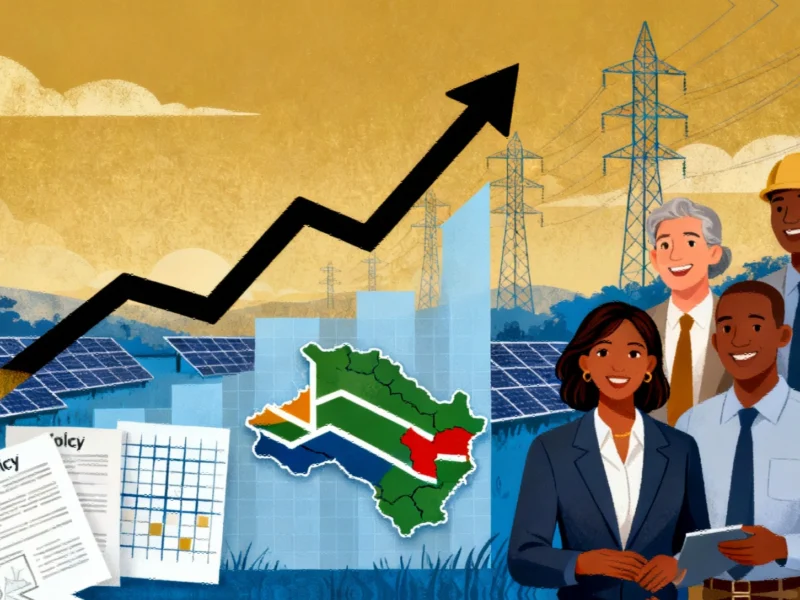
South Africa’s Energy Milestone: Nuweveld Wind Farm Pioneers Grid Integration with 720 MW Project
A New Era for Renewable Energy in the Karoo South Africa’s energy landscape is poised for a transformative shift as…
A New Era for Renewable Energy in the Karoo South Africa’s energy landscape is poised for a transformative shift as…
Global coal consumption reached unprecedented levels in 2024 despite exponential growth in renewable energy, according to a comprehensive climate assessment. The report indicates countries are falling dangerously behind emissions reduction targets needed to limit global warming to 1.5°C.
Global coal consumption reached a record high in 2024 despite significant growth in renewable energy sources, according to the annual State of Climate Action report published Wednesday. The findings indicate that countries are falling dangerously behind their emissions reduction targets, threatening international efforts to limit global warming to 1.5°C above pre-industrial levels as outlined in the Paris Agreement.
The Invisible Energy Crisis While most consumers worry about current electricity rates, a more subtle phenomenon is unfolding: power prices…
South Africa’s state-owned utility Eskom has welcomed the newly launched Integrated Resource Plan 2025 as a clear investment pathway. The plan aims to balance energy security with environmental sustainability while addressing the country’s high unemployment rates. Eskom’s CEO emphasized that regulatory certainty will be crucial for attracting the necessary capital investments.
South Africa’s state-owned electricity provider Eskom has expressed strong support for the government’s newly released Integrated Resource Plan 2025, according to recent reports. Sources indicate the comprehensive energy strategy aims to balance multiple national priorities including energy security, affordability, environmental sustainability, and socioeconomic development during the country’s transition from high-carbon to low-carbon energy sources.
South Africa’s updated energy blueprint mandates higher utilization for gas power plants while allocating significant capacity to nuclear and clean coal technologies. The plan aims to transform the country’s electricity mix away from coal dependency while addressing infrastructure challenges.
South Africa’s Cabinet has approved a revised Integrated Resource Plan (IRP 2025) that significantly alters the country’s electricity generation roadmap, according to reports from the Department of Electricity and Energy. The plan increases the minimum load factor for initial gas-to-power plants to 50% by 2030, a substantial departure from previous flexibility targets. Analysts suggest this change reflects the government’s intention to use gas generation as a cornerstone for industrial energy demand.
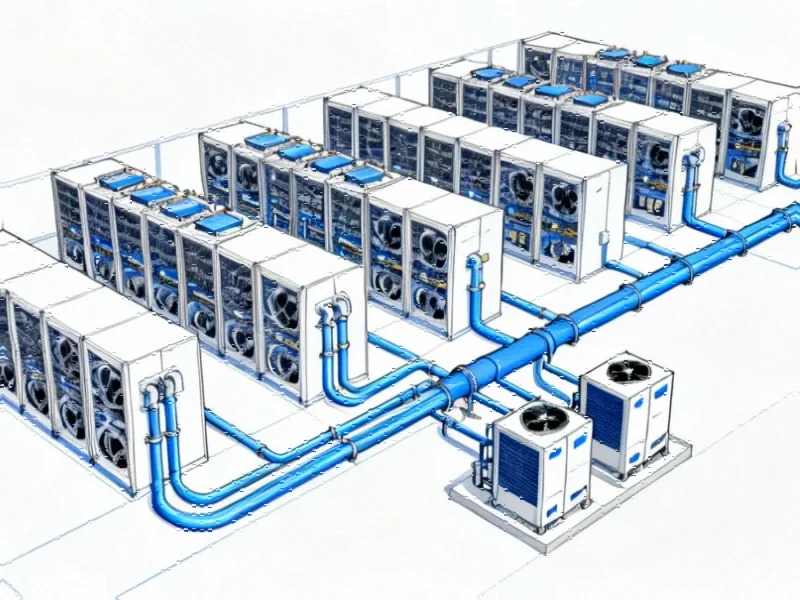
European cloud provider OVHcloud has revealed a new cooling architecture that sources indicate could dramatically reduce environmental impact. The company’s fifth-generation server racks and cooling systems reportedly cut cooling electricity needs by up to 50 percent while reducing water consumption by 30 percent.
European cloud and data center firm OVHcloud has unveiled what it describes as a groundbreaking cooling architecture for its global data center operations. According to reports, the new OVHcloud Smart Datacenter combines innovative industrial designs with artificial intelligence capabilities to significantly reduce both power and water consumption.
The AI Industry’s Fossil Fuel Dependency As artificial intelligence capabilities advance at breakneck speed, few users consider the substantial environmental…
The Unseen Grid Revolution in Data Infrastructure While national conversations focus on AI expansion and data center growth, a quiet…
Manufacturing sectors in North America and Europe are embarking on fundamentally different energy transition pathways, according to industry analysis. While European manufacturers are rapidly electrifying operations, North American producers are maintaining natural gas as their primary power source, setting the stage for potential competitive divergences across the Atlantic manufacturing landscape.
Manufacturers in North America and Europe are reportedly heading toward starkly different energy futures that could reshape industrial competitiveness between the two economic powerhouses, according to recent analysis. Sources indicate that while North American manufacturers will continue relying heavily on natural gas through 2050, European producers are accelerating their shift toward electricity as their primary power source.
Business Confidence Reaches 2024 Peak South Africa’s economic landscape is showing promising signs of revitalization as business confidence climbs to…