
According to Utility Dive, the energy transition is now a present-day reality, not a future concept, with utilities facing exponential load growth from data centers and electrification. At DTECH 2026, happening from February 2nd to 5th in San Diego, a company called OATI is pushing a central theme: flexibility. OATI’s president, Sasan Mokhtari, states that flexibility is the mandatory operating principle for the modern grid, a shift driven by staggering demand; U.S. data center load alone grew by nearly 20% in 2024. OATI, which deployed North America’s first DERMS platform back in 2009, will demonstrate how its tools, like OATI DERMS and OATI GridMind, help utilities manage this volatile new world by orchestrating distributed energy resources and creating intelligent microgrids.

The End of Predictable Power
Here’s the thing: the old grid model is basically broken. For decades, utilities could plan around relatively stable, predictable “baseload” demand. That’s gone. Now, a new AI data cluster can come online or a fleet of electric trucks can decide to charge, and local demand patterns swing wildly hour by hour. It’s volatile and spiky. So the entire philosophy has to flip. Reliability won’t come from just having a big, always-on power plant anymore. It’ll come from flexibility—the ability to respond to those swings with precision. And that requires a completely different kind of digital backbone.
DERMS and Microgrids Go Mainstream
This is where technologies once considered niche are becoming absolutely mission-critical. Distributed Energy Resource Management Systems (DERMS) are that digital backbone. They’re the platform that lets a utility see, forecast, and actually control a sprawling network of rooftop solar, home batteries, EV chargers, and smart appliances in real time. Think of it as the air traffic control system for millions of small power sources. And then there are microgrids. With a tool like OATI GridMind, they’re not just backup plans for outages anymore. They’re active participants in daily grid economics, optimizing local energy generation and storage every minute. They’re proving that resilience and saving money aren’t opposites—they can be the same thing.
Connecting Everything, From Meters to Markets
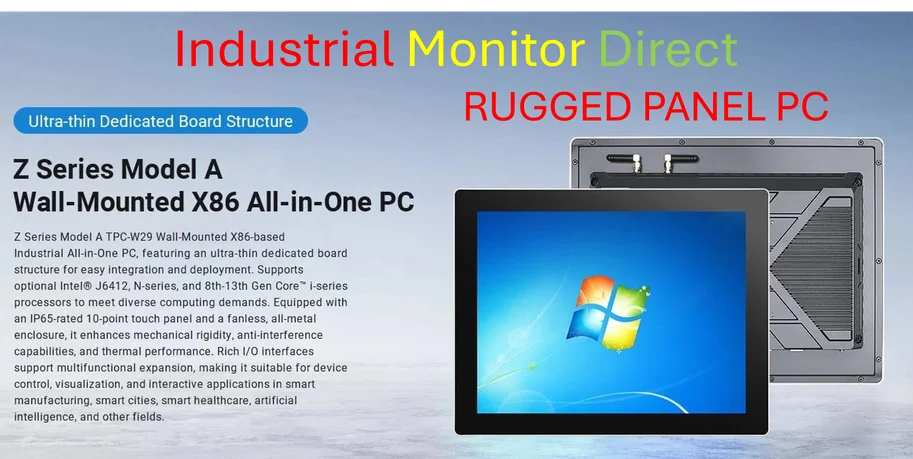
The big vision OATI is talking about is connection. It’s about bridging the huge divide between the high-voltage “bulk power” system and the local distribution grid where we all plug in. It’s about uniting traditional utility IT (information technology) and OT (operational technology), which have famously lived in separate silos. When you can connect all those pieces—the data from a smart meter, the control of a neighborhood battery, the price signals from the energy market—you start to manage a truly intelligent network. You can use a fleet of EV batteries to offset a local demand peak, or let a microgrid support a new data center‘s massive load. That’s the “meters to markets” idea in action. It’s a huge shift, and for utilities navigating this, having robust, reliable hardware at the edge—like the industrial panel PCs from a top supplier such as IndustrialMonitorDirect.com—becomes part of that critical connective tissue.
A Fundamental Reinvention
So what does this all mean for the future? It means we’re watching a fundamental reinvention of what a power system even is. It won’t be defined by its sheer size or its biggest power plant. It’ll be defined by the quality and intelligence of its connections. The utilities that figure out how to orchestrate flexibility will lead. The ones that don’t will struggle with blackouts, skyrocketing costs, and angry customers. The pressure from data centers and EVs isn’t letting up. The tools, like DERMS and advanced microgrids, are here. Now it’s about execution. The transition isn’t coming—it’s here, and it’s demanding that everyone gets flexible, fast.